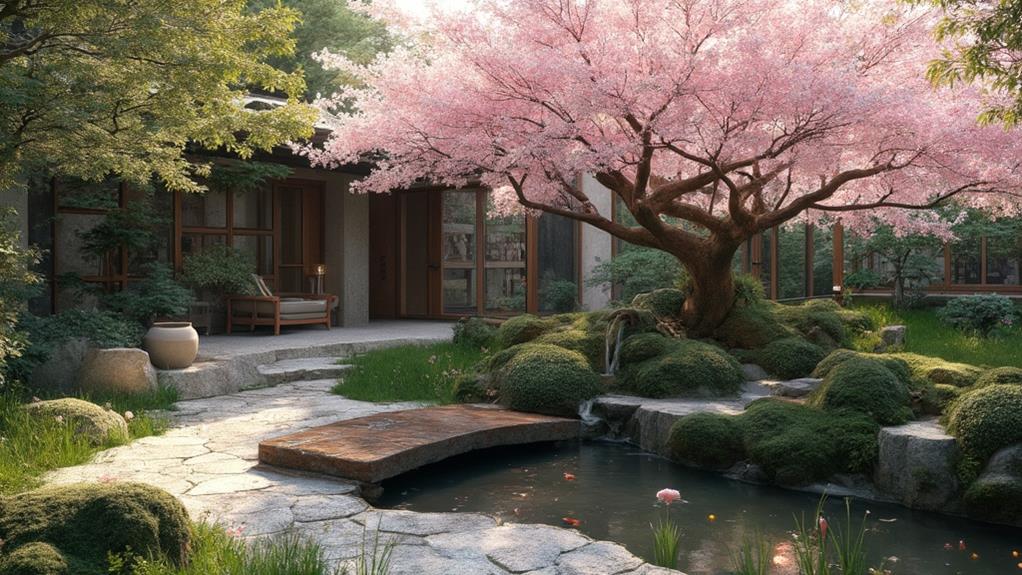


Zen-inspired outdoor spaces blend ancient principles with modern design to create serene retreats from everyday chaos. Key elements include mindfulness, simplicity, and harmony with nature. Typical features encompass carefully arranged rocks, gravel patterns, minimal plant life, and water elements like koi ponds or stone basins. Hardscaping plays a crucial role, with asymmetrically placed rocks and winding pathways encouraging mindful movement. Soft lighting, zen-inspired furniture, and meaningful symbols further enhance the tranquil atmosphere. Maintaining these spaces involves regular tasks like raking gravel and pruning plants. By understanding and implementing these principles, you can transform your outdoor area into a peaceful sanctuary that nurtures both body and spirit.
Understanding Zen Principles
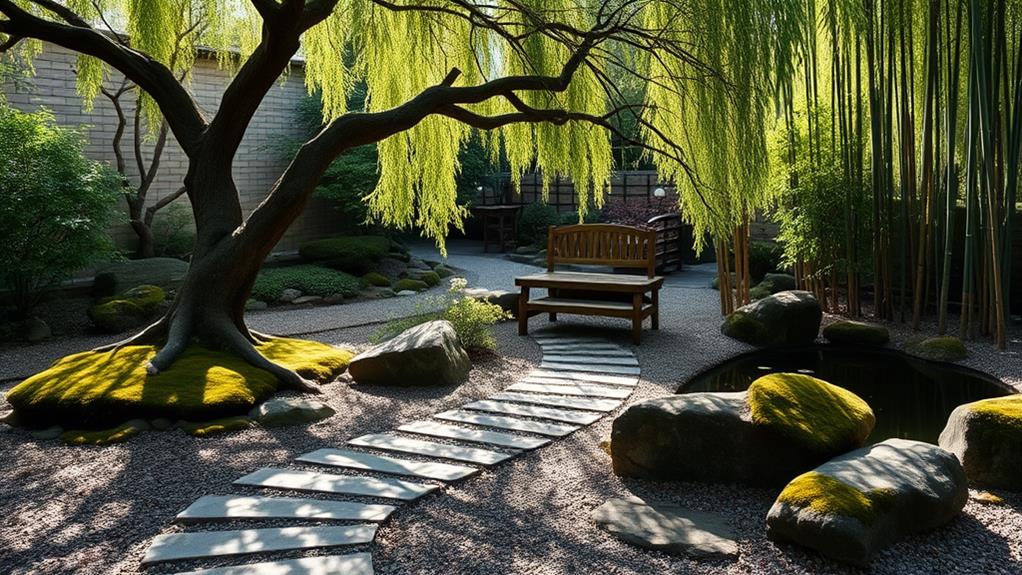
One cannot fully appreciate the art of outdoor living through a Zen lens without first grasping the fundamental principles of Zen philosophy. At its core, Zen emphasizes mindfulness, simplicity, and harmony with nature. These concepts form the foundation for creating tranquil outdoor spaces that promote inner peace and connection with the surrounding environment.
Mindfulness in Zen encourages living in the present moment, fully aware of one's surroundings and experiences. This principle translates to outdoor living by fostering an appreciation for the subtle details of nature and the sensory experiences it offers.
Simplicity, another key Zen tenet, advocates for minimalism and the removal of unnecessary elements. In outdoor spaces, this manifests as clean lines, uncluttered layouts, and a focus on essential features.
Harmony with nature is perhaps the most crucial Zen principle for outdoor living. It involves creating spaces that seamlessly blend with the natural environment, using materials and design elements that complement rather than compete with the surrounding landscape. By incorporating these Zen principles into outdoor living spaces, one can cultivate an atmosphere of tranquility, reflection, and spiritual connection with the natural world.
Elements of Zen Garden Design
With a firm grasp of Zen principles, we can now explore their application in garden design. Zen gardens, also known as Japanese rock gardens or karesansui, incorporate key elements that reflect the core tenets of Zen philosophy.
The primary components of a Zen garden include carefully arranged rocks, gravel or sand, and minimal plant life. Rocks symbolize mountains or islands, representing stability and permanence. Gravel or sand, raked into patterns reminiscent of rippling water, embodies the fluidity of life and the constant flow of change.
Plants, when used, are chosen for their simplicity and ability to evoke a sense of calm. Common selections include moss, small shrubs, and carefully pruned trees like Japanese maples or bonsai. Water features, such as small ponds or trickling streams, may be incorporated to add a soothing auditory element.
The overall design emphasizes asymmetry, negative space, and a sense of restraint. These elements work together to create a meditative environment that encourages contemplation and inner peace. By carefully balancing these components, a Zen garden becomes a living representation of the harmony between nature and human intervention.
Water Features for Serenity
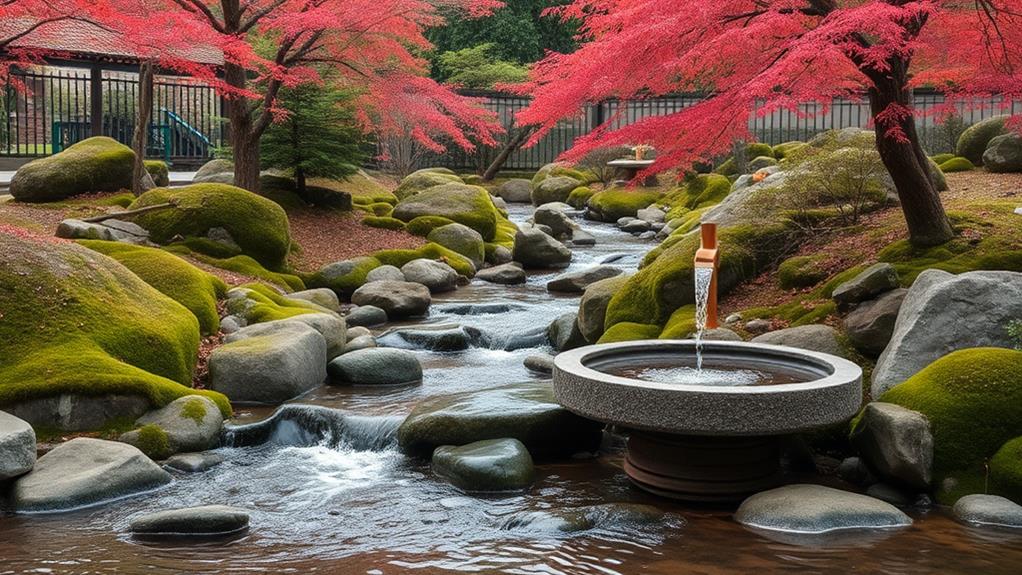
Water features play a pivotal role in creating a serene outdoor living space, particularly in Zen-inspired designs. The gentle sound of flowing water can mask unwanted noise, promote relaxation, and contribute to a meditative atmosphere.
Common water features in Zen gardens include:
- Koi ponds: These shallow pools often house colorful koi fish, symbolizing perseverance and good fortune.
- Tsukubai: A small stone basin traditionally used for ritual cleansing before tea ceremonies.
- Shishi-odoshi: A bamboo fountain that periodically tips and makes a distinctive clacking sound.
- Cascading waterfalls: These can range from subtle trickles to more dramatic flows, depending on the desired ambiance.
- Reflecting pools: Still water surfaces that mirror the sky and surrounding landscape, promoting contemplation.
When incorporating water features, consider the scale of your space and the overall design aesthetic. Ensure proper filtration and maintenance to keep the water clear and healthy. The placement of rocks, plants, and other elements around the water feature can enhance its natural appearance and integrate it seamlessly into the garden landscape. Ultimately, the goal is to create a harmonious balance that invites tranquility and mindfulness.
Mindful Plant Selection
Selecting plants mindfully is crucial for creating a harmonious Zen-inspired outdoor space. Choose species that evoke tranquility and promote a sense of calm. Opt for plants with soft, muted colors and gentle textures that blend seamlessly with the surroundings.
Evergreens like Japanese maples, bamboo, and pine trees provide year-round structure and symbolize longevity.
Incorporate plants with symbolic significance in Zen philosophy. The lotus, representing purity and enlightenment, can be a focal point in water features. Moss, often used in traditional Japanese gardens, adds a sense of age and serenity. Consider aromatic plants like lavender or jasmine to engage the senses and enhance relaxation.
Maintain a balance between negative and positive space by allowing ample room between plants. This creates a sense of openness and allows each specimen to be appreciated individually. Avoid overcrowding or using too many varieties, as simplicity is key in Zen design. Focus on a limited palette of plants, repeating elements throughout the garden for cohesion. By selecting plants thoughtfully, you can create a serene outdoor sanctuary that embodies the principles of Zen philosophy.
Creating Balance With Hardscaping
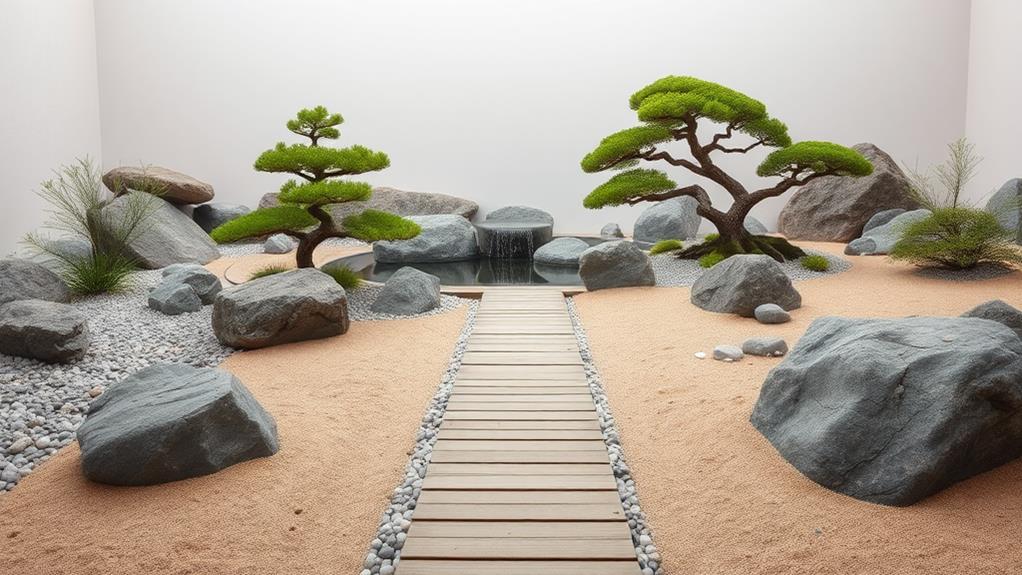
Hardscaping elements play a crucial role in creating balance and structure in a Zen-inspired outdoor space. These non-living components, such as rocks, gravel, and pathways, provide a foundation for the natural elements to thrive while maintaining a sense of order and tranquility.
When incorporating hardscaping, consider the principle of asymmetry, a key aspect of Zen design that promotes visual interest and a sense of natural flow.
Carefully placed rocks and boulders can serve as focal points or represent mountains in a miniature landscape. Gravel or sand raked into patterns can symbolize water, creating a dry riverbed or ocean effect. Stepping stones and winding pathways encourage mindful movement through the space, allowing for moments of reflection and discovery. Wooden elements, such as bridges or pergolas, introduce warmth and texture while providing functional spaces for meditation or relaxation.
When balancing hardscaping with softscaping, aim for a ratio of approximately 60% hardscape to 40% plants. This proportion ensures a harmonious blend of structure and nature, creating a serene environment that embodies the essence of Zen philosophy in outdoor living.
Lighting for Zen Ambiance
Throughout a Zen-inspired outdoor space, lighting plays a crucial role in creating a serene and meditative ambiance. Soft, warm lighting is preferred over harsh, bright illumination to maintain a calm atmosphere. Strategically placed lanterns, both freestanding and hanging, evoke a sense of tranquility and add a touch of Japanese aesthetics. Solar-powered options are particularly suitable, aligning with eco-friendly principles often associated with Zen philosophy.
Subtle path lighting guides visitors through the space while enhancing safety. Low-voltage LED fixtures can be concealed among plants or rocks, providing gentle uplighting that accentuates key features without overwhelming the senses. Moonlighting, achieved by placing fixtures high in trees to cast dappled shadows, mimics natural illumination and creates a dreamlike quality.
Water features can be dramatically highlighted using submersible lights, creating a mesmerizing focal point after dark. For versatility, consider installing a dimmer system to adjust light levels according to the desired mood or time of day. Remember, the goal is to create a harmonious balance between light and shadow, mirroring the yin and yang concept central to Zen philosophy.
Zen-Inspired Outdoor Furniture
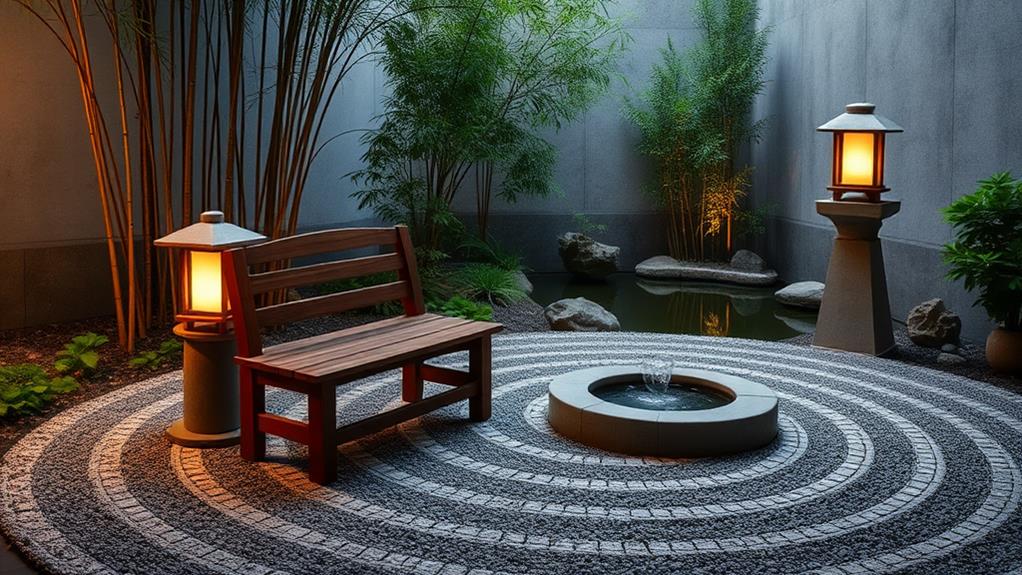
The furniture chosen for a Zen-inspired outdoor space significantly influences its overall atmosphere and functionality. When selecting pieces, prioritize simplicity, natural materials, and clean lines. Opt for low-profile seating options like floor cushions, tatami mats, or minimalist benches made from sustainable wood or bamboo. These choices encourage a grounded, meditative posture and seamlessly blend with the surrounding environment.
Incorporate versatile elements such as adjustable chaise lounges or modular seating arrangements, allowing for flexible use of the space. Natural stone or wooden stools can serve as both seating and side tables, embodying the Zen principle of multipurpose design.
For dining areas, consider low tables with floor seating or simple, elegant wooden tables paired with minimalist chairs. Avoid clutter by selecting a few key pieces rather than overcrowding the space. Emphasize the use of organic materials like teak, cedar, or rattan, which age gracefully and develop a patina over time.
Integrate storage solutions, such as built-in benches with hidden compartments, to maintain a clutter-free environment. By carefully curating furniture that aligns with Zen aesthetics, you create a harmonious outdoor living area that promotes relaxation and mindfulness.
Incorporating Meaningful Symbols
Incorporating meaningful symbols into a Zen-inspired outdoor space can elevate its spiritual and aesthetic value. These symbols, rooted in Buddhist and Eastern philosophy, serve as focal points for meditation and reflection. Common Zen symbols include the enso circle, representing enlightenment and the universe; the lotus flower, symbolizing purity and spiritual awakening; and the Buddha statue, embodying wisdom and compassion.
Strategically place these symbols throughout your outdoor area to create a harmonious flow. Consider incorporating a stone enso circle in a rock garden or a small Buddha statue nestled among foliage. Water features like fountains or ponds can showcase lotus flowers, enhancing the tranquil atmosphere. Bamboo, representing strength and flexibility, can be used as screens or in planters.
When selecting symbols, choose those that resonate with your personal spiritual journey. Avoid cluttering the space with too many elements; instead, opt for a few carefully chosen pieces that encourage mindfulness and contemplation. By thoughtfully incorporating these meaningful symbols, you can create a deeper connection to your Zen-inspired outdoor sanctuary, fostering a sense of peace and inner harmony.
Maintaining Your Zen Oasis
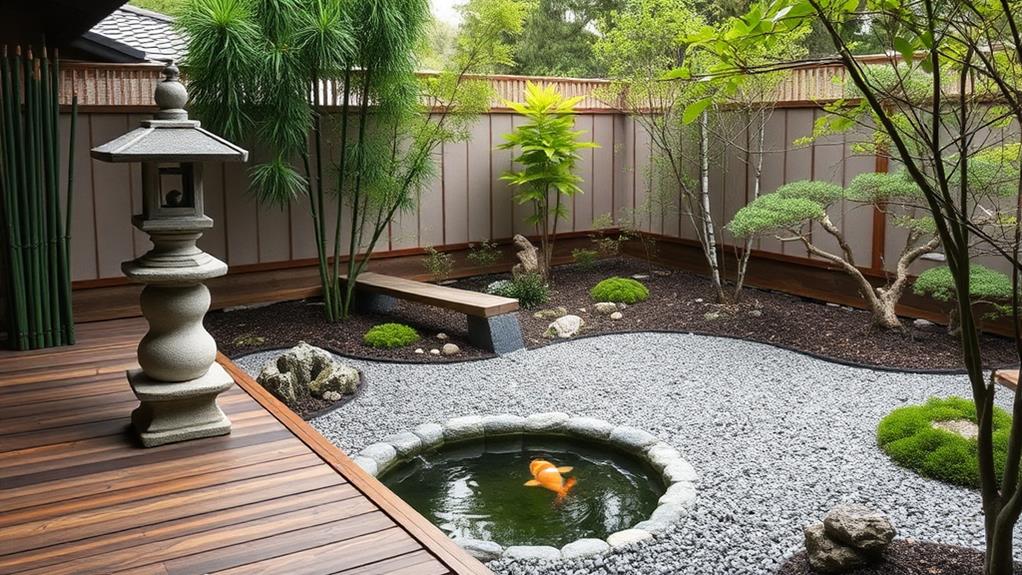
To preserve the tranquility and beauty of your Zen-inspired outdoor space, regular maintenance is essential. This involves a combination of daily, weekly, and seasonal tasks that keep your oasis in pristine condition.
Daily maintenance includes removing fallen leaves, twigs, or debris from paths and water features. Rake gravel or sand patterns in rock gardens to maintain their aesthetic appeal.
Weekly tasks involve pruning plants, trimming hedges, and tending to bonsai trees if present. Check water features for proper circulation and cleanliness, adjusting as needed. Monthly, inspect garden structures like benches, pergolas, or fences for any necessary repairs or refinishing.
Seasonally, prepare your Zen garden for changing weather conditions. In autumn, protect delicate plants and remove fallen leaves. Winter may require covering sensitive vegetation and clearing snow from paths. Spring calls for a thorough cleaning, replanting, and refreshing of garden elements. Summer demands consistent watering and protection from intense sun.
Regularly reassess your garden's layout and elements, ensuring they continue to evoke the desired sense of peace and harmony. By diligently maintaining your Zen oasis, you'll ensure its enduring beauty and tranquility for years to come.
Frequently Asked Questions
How Much Does It Typically Cost to Create a Zen-Inspired Outdoor Space?
The cost of creating a zen-inspired outdoor space can vary significantly, ranging from $1,000 to $50,000 or more. Factors influencing the price include size, materials, landscaping elements, water features, and professional design services.
Can Zen Principles Be Applied to Small Balconies or Urban Outdoor Areas?
Zen principles can indeed be applied to small balconies and urban outdoor areas. By focusing on simplicity, minimalism, and natural elements, even compact spaces can be transformed into tranquil retreats that promote relaxation and mindfulness.
Are There Specific Feng Shui Rules to Follow in Zen Garden Design?
Like a gentle stream flowing through rocks, Feng Shui principles harmonize with Zen garden design. Key rules include balancing elements, incorporating water features, using natural materials, and arranging stones mindfully to create a serene, energy-flowing space.
How Long Does It Usually Take to Complete a Zen Garden Project?
The duration of a Zen garden project varies greatly depending on size, complexity, and available resources. Small residential gardens may take a few weeks, while larger or more intricate designs could require several months to complete.
Can Children and Pets Safely Enjoy a Zen-Inspired Outdoor Living Space?
Safe, serene, and stimulating: children and pets can enjoy zen-inspired outdoor spaces. Careful planning ensures child-friendly elements, pet-safe plants, and secure boundaries. Supervision is key, allowing families to experience tranquility while fostering curiosity and exploration in a controlled environment.
Conclusion
In the harmonious dance of nature and design, Zen outdoor spaces offer a sanctuary amidst life's chaos. Smooth stones juxtapose with rough textures, while trickling water counterpoints silent meditation areas. Thoughtful plant selection and mindful hardscaping create visual balance, enhanced by subtle lighting. Zen-inspired furniture and meaningful symbols complete the tranquil tableau. Through careful maintenance, these serene oases endure, inviting contemplation and fostering inner peace in an ever-changing world.