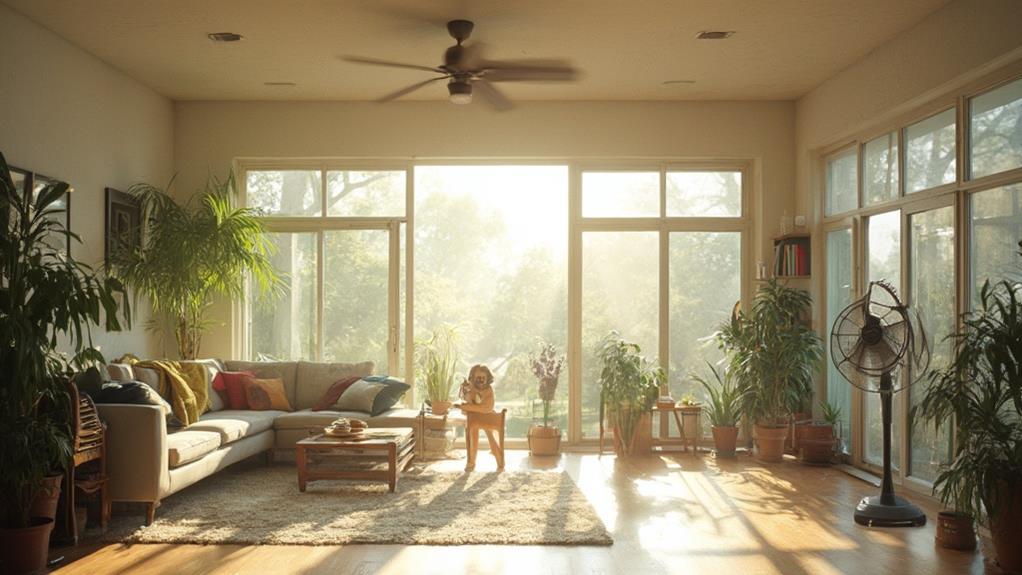


Improving home air circulation involves several effective renovation strategies. Installing ceiling fans enhances air movement and comfort. Upgrading windows and doors provides better insulation and ventilation options. Adding attic ventilation regulates temperature and reduces moisture. Creating cross ventilation by strategically positioning windows and doors harnesses natural airflow. Implementing ductless air systems offers targeted cooling without extensive ductwork. Incorporating natural ventilation features like solar chimneys or wind towers can also boost air movement. These approaches not only enhance comfort but also contribute to energy efficiency and indoor air quality. Exploring these strategies further can reveal additional benefits for your home's overall environment.
Install Ceiling Fans
Installing ceiling fans is an effective and energy-efficient way to improve air circulation in your home. These versatile fixtures not only enhance airflow but also complement your interior design. When selecting ceiling fans, consider factors such as room size, ceiling height, and blade span to ensure optimal performance.
For maximum efficiency, install fans in frequently used areas like living rooms, bedrooms, and kitchens. Position them at least 7 feet above the floor and 10-12 inches below the ceiling for best results. Ensure proper mounting to avoid wobbling or noise issues. Many modern ceiling fans come with reversible motors, allowing you to change the blade direction seasonally. In summer, set blades to rotate counterclockwise, creating a cooling downdraft. In winter, reverse the direction to gently push warm air down from the ceiling.
Opt for Energy Star certified models to maximize energy savings. These fans are up to 60% more efficient than conventional models. Consider fans with remote controls or smart home integration for added convenience. Regular maintenance, including dusting blades and tightening screws, will keep your fans operating smoothly and quietly, ensuring continued improvement in your home's air circulation.
Upgrade Windows and Doors
While ceiling fans enhance indoor air movement, upgrading windows and doors can significantly improve overall home air circulation. Modern energy-efficient windows and doors not only provide better insulation but also offer enhanced ventilation options. Double-hung windows, for instance, allow for both top and bottom sashes to be opened, creating a natural convection current that draws cool air in through the bottom and expels warm air through the top.
Consider installing casement windows, which open outward like a door, maximizing airflow when fully extended. For doors, storm doors with retractable screens can be excellent additions, allowing for increased ventilation while maintaining security. French doors or sliding glass doors can also dramatically improve air circulation between indoor and outdoor spaces.
When selecting new windows and doors, look for products with high air leakage ratings and low U-factors, which indicate better insulation properties. Additionally, proper installation is crucial to ensure airtightness when closed and smooth operation for ventilation. By upgrading to more efficient and versatile windows and doors, homeowners can achieve better control over their indoor air quality and circulation while potentially reducing energy costs.
Add Attic Ventilation
A well-ventilated attic plays a crucial role in maintaining optimal home air circulation. Proper attic ventilation helps regulate temperature, reduce moisture buildup, and prevent the formation of ice dams in colder climates. To improve attic ventilation, consider installing ridge vents along the roof's peak, which allow hot air to escape naturally. Complement these with soffit vents under the eaves to create a continuous airflow system.
For homes without existing vents, gable vents or turbine vents can be effective alternatives. Gable vents are installed on the exterior walls of the attic, while turbine vents use wind power to draw out hot air. In some cases, powered attic fans may be necessary to enhance air movement, especially in areas with limited natural airflow.
When adding attic ventilation, it's crucial to maintain the proper balance between intake and exhaust vents. A general rule of thumb is to have 1 square foot of ventilation for every 300 square feet of attic floor space. Proper insulation should also be installed to prevent conditioned air from escaping through the attic, ensuring energy efficiency while maintaining good air circulation throughout the home.
Create Cross Ventilation
For effective home air circulation, cross ventilation is a powerful technique that harnesses natural airflow. This method involves creating pathways for air to move through your home by strategically opening windows and doors on opposite sides of a room or building. The key to successful cross ventilation is understanding prevailing wind patterns and positioning openings to maximize airflow.
To implement cross ventilation, start by identifying the direction of dominant winds in your area. Open windows on the windward side to allow fresh air in, and create exit points on the opposite side to expel stale air. For multi-story homes, utilize the stack effect by opening upper-level windows to release warm air while drawing cooler air from lower levels.
Consider installing casement or awning windows that can be angled to capture and direct breezes. Use interior doors, transom windows, and open floor plans to create unobstructed pathways for air movement. Additionally, strategically placed fans can enhance cross ventilation by boosting air circulation, especially on calm days. Proper implementation of cross ventilation can significantly reduce reliance on mechanical cooling systems, improving energy efficiency and indoor air quality.
Implement Ductless Air Systems
Implementing ductless air systems offers a versatile and efficient solution for home air circulation. These systems, also known as mini-split systems, consist of an outdoor compressor unit connected to one or more indoor air-handling units. Unlike traditional central air conditioning systems, ductless units do not require extensive ductwork, making them ideal for older homes, additions, or spaces where installing ducts is impractical.
Ductless air systems provide targeted cooling and heating, allowing homeowners to create individualized comfort zones throughout their living spaces. This zoned approach enhances energy efficiency by eliminating the need to condition unused areas. Installation is typically less invasive and time-consuming compared to traditional HVAC systems, reducing disruption to the home's structure and occupants' daily lives.
Modern ductless systems often include advanced features such as programmable thermostats, remote control operation, and air purification capabilities. These features contribute to improved indoor air quality and enhanced user control. While the initial cost of ductless systems may be higher than some alternatives, their energy efficiency and low maintenance requirements can lead to significant long-term savings on utility bills and repair costs.
Incorporate Natural Ventilation Features
Natural ventilation features complement ductless air systems by harnessing the power of nature to improve indoor air quality and reduce energy consumption. These features utilize strategic design elements to create airflow paths throughout the home, promoting circulation and temperature regulation without relying on mechanical systems.
Key natural ventilation features include operable windows, skylights, and transom windows. Positioning these elements on opposite sides of rooms or at varying heights encourages cross-ventilation and stack effect, respectively. Casement windows, which open fully, are particularly effective for capturing breezes. Additionally, installing window awnings or overhangs can direct airflow while providing shade.
Architectural elements like clerestory windows, solar chimneys, and courtyards can further enhance natural ventilation. Clerestory windows allow hot air to escape from high points, while solar chimneys create a convection current to draw cool air in from lower levels. Courtyards can serve as thermal buffers, moderating temperatures and facilitating air movement between indoor and outdoor spaces.
To maximize the effectiveness of natural ventilation features, consider factors such as prevailing wind patterns, building orientation, and local climate conditions when planning their implementation. Proper placement and design of these elements can significantly reduce reliance on mechanical cooling systems and improve overall home comfort.
Frequently Asked Questions
How Does Air Circulation Impact Indoor Air Quality and Health?
Air circulation significantly impacts indoor air quality and health by removing pollutants, regulating humidity, and preventing stagnant air. Proper ventilation reduces the concentration of allergens, mold spores, and harmful gases, promoting a healthier living environment for occupants.
What's the Ideal Humidity Level for Optimal Air Circulation?
Humidity's harmonious balance is crucial for comfort and circulation. The ideal indoor humidity level ranges from 30% to 50%. Maintaining this moisture mark minimizes mold growth, reduces allergens, and promotes optimal air flow throughout your home's environment.
Can Improving Air Circulation Help Reduce Energy Costs?
Improving air circulation can indeed help reduce energy costs. Proper airflow enhances HVAC system efficiency, reducing the workload on heating and cooling units. This optimization leads to lower energy consumption and, consequently, decreased utility bills for homeowners.
Are There Specific Plants That Can Enhance Indoor Air Circulation?
Certain plants can enhance indoor air circulation by releasing moisture and increasing humidity. Examples include spider plants, peace lilies, and Boston ferns. These plants naturally improve air quality and promote better airflow within enclosed spaces.
How Often Should Air Filters Be Changed to Maintain Good Circulation?
Like a breath of fresh air, regular filter changes are vital. Generally, air filters should be replaced every 1-3 months, depending on usage and environmental factors. Consult your HVAC system's manual for specific recommendations to maintain optimal circulation.
Conclusion
Enhancing home air circulation through strategic renovations yields multifaceted benefits. From installing ceiling fans to implementing ductless systems, each approach contributes to improved indoor air quality, energy efficiency, and overall comfort. By upgrading windows, adding attic ventilation, and creating cross-ventilation, homeowners can harness natural airflow. Incorporating these techniques not only optimizes the living environment but also potentially increases property value. Embracing both mechanical and natural ventilation strategies ensures a comprehensive solution for a healthier, more sustainable home atmosphere.