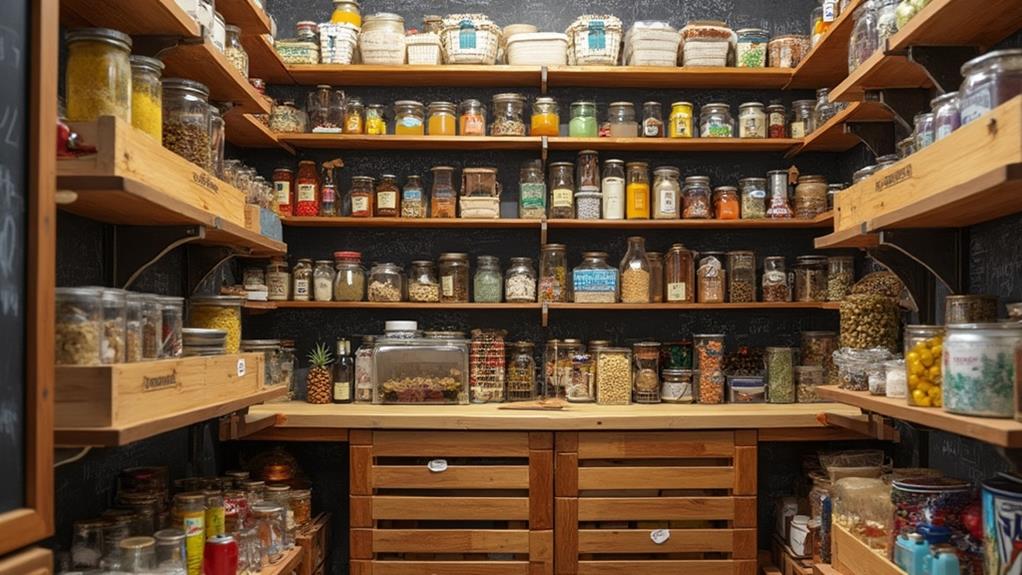

Achieving pantry perfection on a budget is simpler than you might think. Start by assessing your current situation and decluttering expired items. Repurpose household objects like mason jars and shoe organizers for creative storage solutions. Maximize vertical space with adjustable shelving and over-door organizers. Label everything clearly and group similar items together for easy access. Utilize door space effectively with hanging racks and magnetic strips. Create designated zones for different food categories and implement budget-friendly storage solutions like tension rods and cardboard dividers. Regular maintenance ensures long-term organization. With these practical tips, you'll be well on your way to a perfectly organized pantry without breaking the bank.
Assess Your Current Pantry Situation
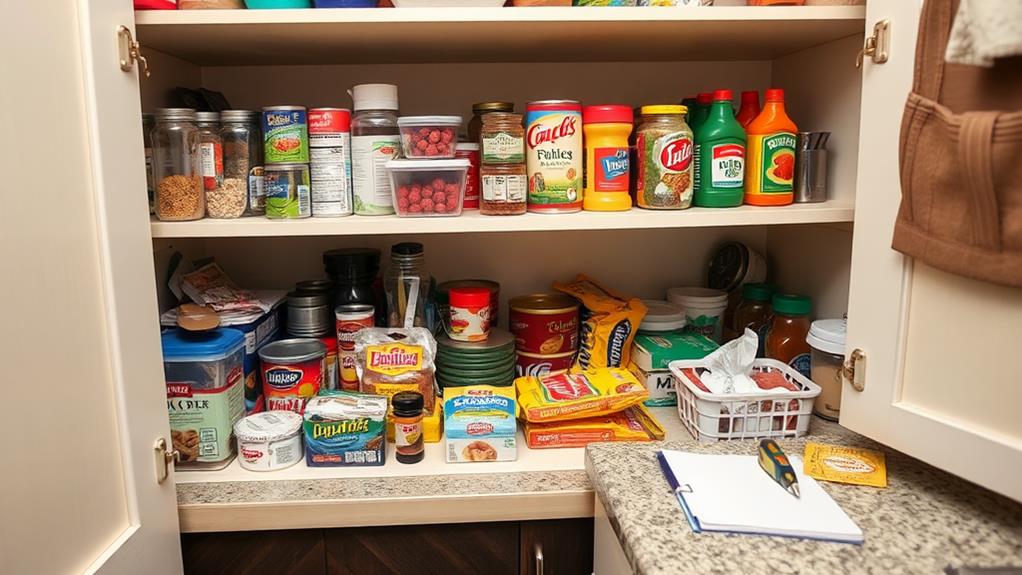
Before embarking on a pantry organization project, it's crucial to assess your current situation. Take inventory of your pantry's contents, noting expired items, duplicates, and rarely used products. Evaluate the available space, including shelving, door storage, and floor area. Consider your family's eating habits and frequently used ingredients to determine optimal placement for essentials.
Examine your current organizational system, if any, and identify areas for improvement. Look for inefficient use of space, hard-to-reach items, or cluttered zones that hinder easy access. Assess the lighting in your pantry, as poor visibility can lead to forgotten items and wasted food.
Measure your pantry dimensions and note any unique features or constraints that may impact organization solutions. Consider your budget for potential storage containers, labels, or organizational tools. Identify problem areas, such as difficulty finding specific items or maintaining order over time. By thoroughly assessing your current pantry situation, you'll gain valuable insights to guide your organization efforts and create a more efficient, user-friendly space without unnecessary expenses.
Declutter and Purge Expired Items
With your pantry assessment complete, the next step in your organization journey is to declutter and purge expired items. Begin by removing everything from your pantry shelves and placing items on a clean, flat surface. Check expiration dates on all food products, discarding anything that has expired or shows signs of spoilage. Pay special attention to canned goods, spices, and baking ingredients, which often have longer shelf lives but can still lose potency over time.
As you sort through items, create separate piles for keeping, donating, and discarding. Consider donating unexpired, non-perishable items you no longer want to local food banks or community organizations. For items you're keeping, wipe down containers and check for any signs of pest infestation.
While decluttering, take note of duplicates or items you rarely use. This information will help you make more informed purchasing decisions in the future, potentially saving money and reducing waste. Once you've purged expired and unwanted items, you'll have a clearer picture of your pantry's contents and be better prepared for the next steps in your organization process.
Repurpose Household Objects for Storage
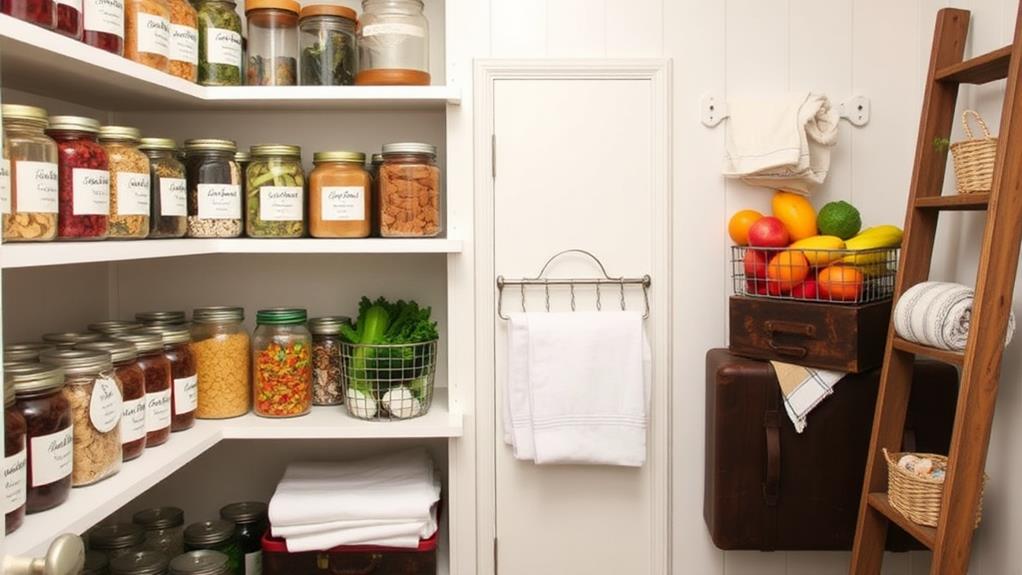
To maximize your pantry's storage potential without breaking the bank, consider repurposing common household objects. Mason jars, often found in abundance, can be used to store dry goods like rice, pasta, and beans, while providing an airtight seal to maintain freshness. Empty coffee cans, with their sturdy construction and resealable lids, are ideal for storing baking supplies or snacks.
Shoe organizers can be repurposed as versatile storage solutions. Hang one on the back of your pantry door to store small items like spice packets, tea bags, or individually wrapped snacks. Magazine holders can be transformed into vertical storage units for canned goods or boxed items, maximizing shelf space.
Tension rods can create additional shelving or act as dividers within existing shelves. Use them to separate cutting boards or baking sheets for easy access. Repurpose old file organizers to store aluminum foil, plastic wrap, and wax paper boxes vertically. Lastly, utilize empty tissue boxes to dispense plastic grocery bags for easy reuse. These creative solutions not only save money but also add a personalized touch to your pantry organization.
Maximize Vertical Space Creatively
Maximizing vertical space is crucial for an efficient pantry organization. To achieve this, consider installing adjustable shelving units that can be customized to fit various container heights.
Utilize the back of the pantry door by adding over-the-door organizers or hanging baskets for small items like spice packets or snack bars. Implement stackable containers to create vertical storage columns, ensuring easy access to frequently used items.
Incorporate tension rods vertically between shelves to create additional storage for baking sheets, cutting boards, or even canned goods. Use tiered shelf risers to create multiple levels within a single shelf, effectively doubling the usable space.
Install hooks or pegboards on empty wall space to hang utensils, measuring cups, or lightweight pots and pans. Consider using magnetic strips to store metal containers or small tools vertically along the sides of shelves or on the pantry walls.
For deep shelves, employ pull-out drawers or sliding organizers to maximize accessibility and prevent items from getting lost in the back. By creatively utilizing vertical space, you can significantly increase your pantry's storage capacity without expanding its footprint.
Label Everything Clearly
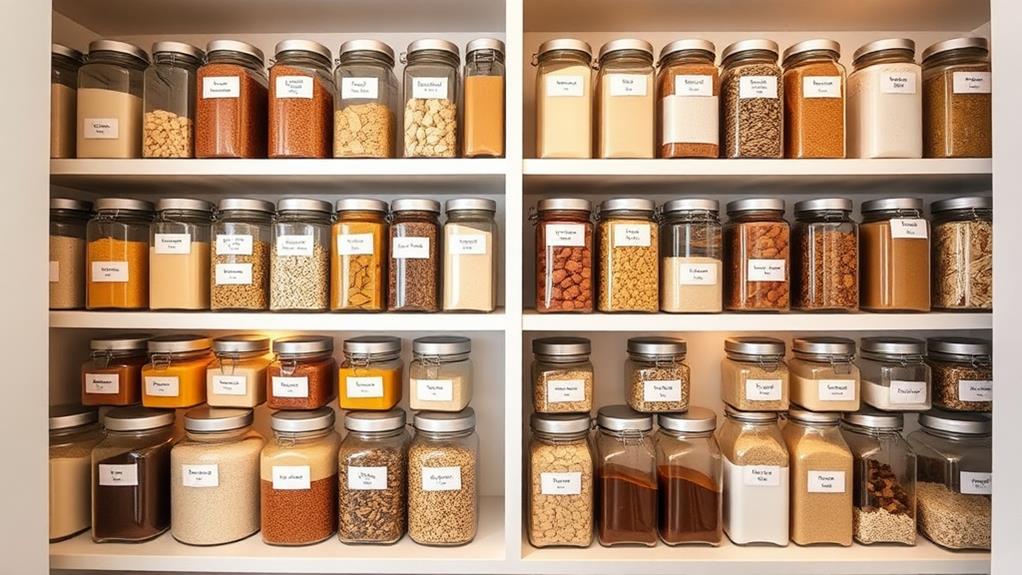
Clarity is the cornerstone of an efficient pantry organization system. Labeling items in your pantry not only helps you locate products quickly but also ensures that family members can easily maintain the organizational system you've established. Invest in an affordable label maker or use simple handwritten labels on masking tape for a budget-friendly option.
Start by labeling individual containers, jars, and bins. Transfer dry goods like flour, sugar, and pasta into clear, airtight containers and label them with the contents and expiration date. For shelves and zones, create category labels such as "Baking Supplies," "Canned Goods," or "Snacks" to group similar items together.
Consider using color-coded labels to further streamline your system. Assign different colors to various food types or family members' dietary needs. For example, use green labels for healthy snacks and red for treats. This visual cue can help with quick decision-making and portion control.
Don't forget to label the edges of adjustable shelves, noting their ideal positions for different-sized items. This ensures proper shelf spacing when rearranging your pantry. Regularly update labels as you rotate stock to maintain an accurate inventory.
Group Similar Items Together
With your labels in place, the next step in pantry organization involves grouping similar items together. This approach maximizes space efficiency and simplifies meal planning and grocery shopping. Start by creating distinct zones for different food categories, such as baking supplies, canned goods, snacks, and breakfast items.
Arrange products by type within each zone. For instance, place all flour varieties together, followed by sugars, then baking powders and sodas. In the canned goods section, group vegetables, fruits, and soups separately. This system allows for quick inventory checks and prevents duplicate purchases.
Consider frequency of use when positioning items. Place everyday essentials at eye level and within easy reach, while storing less frequently used items on higher or lower shelves. Utilize stackable containers or baskets to keep smaller items organized and prevent them from getting lost.
Group cooking oils, vinegars, and sauces in one area, preferably near your food preparation space. Keep spices and herbs together, possibly using a lazy Susan or tiered organizer for easy access. By systematically grouping similar items, you'll create a more functional and efficient pantry space.
Utilize Door Space Effectively
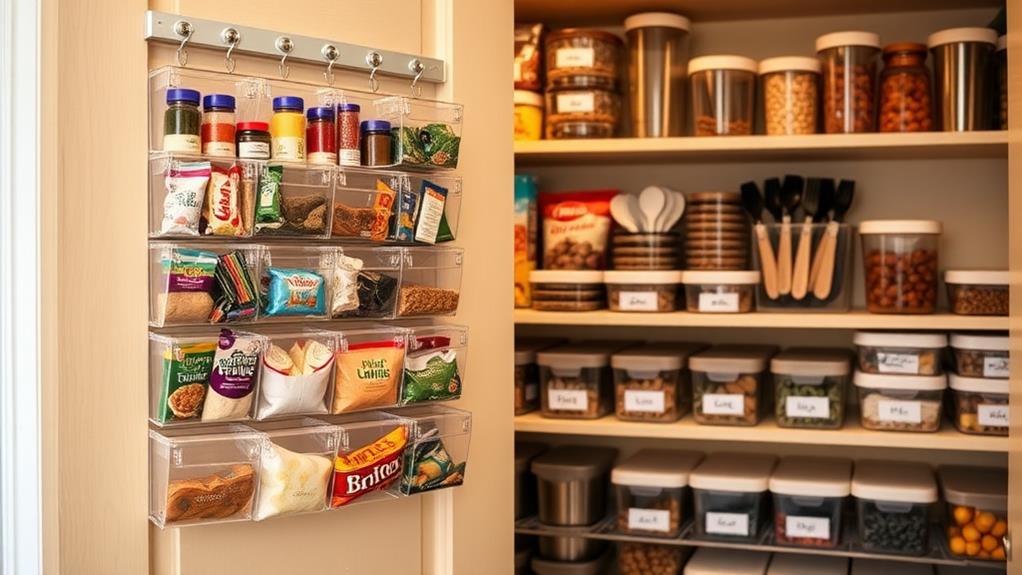
Harnessing the often-overlooked potential of pantry doors can significantly expand your storage capacity. Install over-the-door organizers or hanging racks to create additional storage space without spending a fortune. These versatile additions can hold a variety of items, from spices and condiments to small utensils and snacks.
For a budget-friendly option, repurpose shoe organizers with clear pockets to store individually packaged items, making them easily visible and accessible. Alternatively, mount narrow shelves or baskets directly onto the door to maximize vertical space. When selecting door organizers, consider the door's weight capacity and ensure proper installation to prevent damage.
Magnetic strips adhered to the door's interior can hold metal containers for spices or small tools. For heavier items, install sturdy hooks to hang pots, pans, or utensils. To maintain order, label each section or container clearly. This not only helps with organization but also makes it easier for family members to locate and return items to their designated spots. By effectively utilizing door space, you can free up valuable shelf room and create a more efficient, organized pantry without breaking the bank.
Create Zones for Easy Access
Dividing your pantry into distinct zones streamlines organization and enhances accessibility. Begin by categorizing items into logical groups such as baking supplies, canned goods, snacks, and breakfast items. Assign a specific area for each category, keeping frequently used items at eye level and less-used items on higher or lower shelves.
Use clear containers or baskets to group similar items together within each zone. This not only creates a uniform appearance but also makes it easier to see what you have and what needs restocking. Label these containers clearly to avoid confusion and maintain order.
Consider creating a "meal prep" zone where you store ingredients for quick weeknight dinners or commonly used recipe components. This can save time and reduce stress during busy evenings. Implement a first-in, first-out (FIFO) system for perishables to minimize food waste.
For families, designate a low shelf or basket for kid-friendly snacks and drinks, allowing children to access their items independently. Finally, create a small zone for new or unfamiliar ingredients to encourage culinary exploration without losing track of these items in the depths of your pantry.
Incorporate Budget-Friendly Storage Solutions
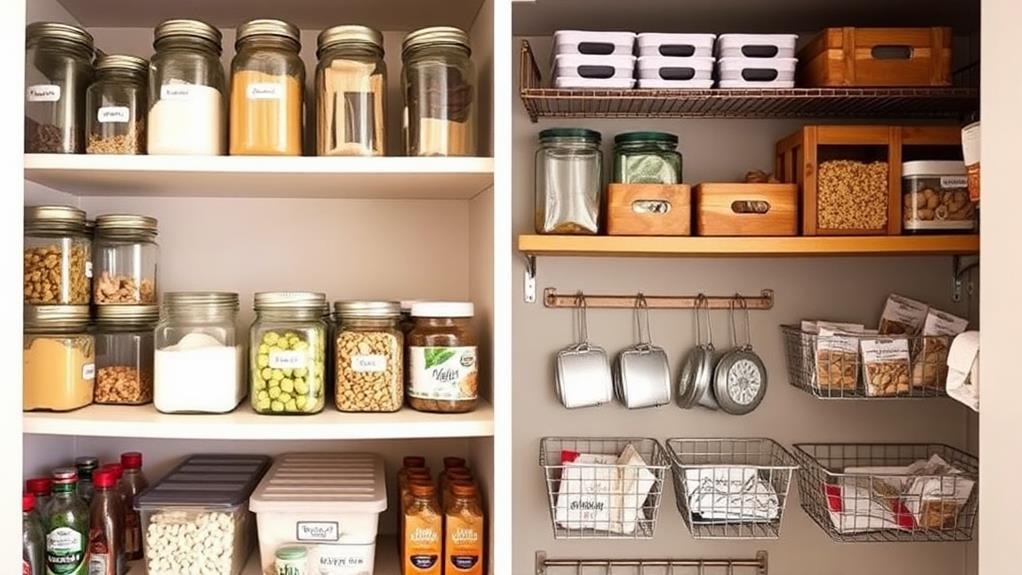
Budget-friendly storage solutions can transform your pantry without breaking the bank. Repurpose common household items to create efficient storage options. Mason jars, for example, can be used to store dry goods like rice, beans, and pasta. Clear plastic containers from dollar stores offer an affordable way to keep cereal, snacks, and baking supplies organized and visible.
Utilize vertical space by installing inexpensive wire racks or over-the-door organizers. These can hold spices, condiments, or small packaged items. Tension rods can create additional shelving or act as dividers for baking sheets and cutting boards. Repurpose magazine holders to store canned goods or boxed items vertically, maximizing shelf space.
Consider using baskets or bins from thrift stores to group similar items together. Label these containers with chalkboard paint or adhesive labels for easy identification. Lazy Susans, often found at discount stores, can make hard-to-reach corners accessible. For a DIY approach, create custom drawer organizers using cardboard boxes cut to size. These budget-friendly solutions not only improve organization but also enhance the overall functionality of your pantry without costly renovations.
Maintain Your Organized Pantry
Maintaining an organized pantry requires consistent effort and a few simple habits. Implement a regular cleaning schedule, wiping down shelves and containers at least once a month to prevent dust accumulation and pest infestations. Conduct periodic inventory checks, removing expired items and restocking essentials. This practice helps maintain an accurate understanding of your pantry contents and prevents unnecessary purchases.
Establish a "first in, first out" (FIFO) system by placing newer items behind older ones, ensuring that products are used before they expire. Label containers and shelves clearly to maintain order and make items easily identifiable. Consider using erasable labels for frequently rotated items.
Designate specific areas for different food categories and stick to this system when restocking. Regularly reassess your pantry organization to ensure it still meets your needs, adjusting as necessary. Involve family members in maintaining the system by teaching them where items belong and encouraging them to return things to their proper places after use.
Lastly, resist the urge to overstuff your pantry. Maintain some open space to allow for easy item retrieval and to accommodate occasional bulk purchases or seasonal items.
Frequently Asked Questions
How Often Should I Deep Clean My Pantry?
A deep clean of your pantry should be performed at least twice a year. However, frequency may vary depending on usage and household size. Regular spot cleaning and organization can help maintain cleanliness between deep cleans.
What's the Best Lighting Solution for a Dark Pantry?
For a dark pantry, consider battery-operated LED strip lights or puck lights. These are cost-effective, easy to install, and provide ample illumination. Motion-activated options are particularly convenient, conserving energy while ensuring visibility when needed.
How Can I Prevent Pests From Invading My Organized Pantry?
To prevent pests in your pantry, implement these strategies: Store food in airtight containers, regularly clean shelves, use natural repellents like bay leaves or peppermint oil, seal entry points, and maintain proper humidity levels. Inspect new items before storage.
Are There Specific Pantry Organization Apps You Recommend?
Sarah, a busy mom of three, streamlined her pantry using the Pantry Check app. Several apps can help organize your pantry, including Pantry Check, Out of Milk, and Pantry Manager. These apps offer inventory tracking, expiration date reminders, and shopping list features.
How Do I Handle Bulk Items in a Small Pantry Space?
To handle bulk items in a small pantry, utilize vertical space with stackable containers or shelves. Decant large quantities into smaller, labeled containers. Consider door-mounted organizers or under-shelf baskets for additional storage. Regularly rotate items to maximize space efficiency.
Conclusion
As the final jar finds its labeled home and the last shelf gleams with newfound order, a transformed pantry emerges. By chance, the very act of organizing reveals forgotten ingredients and inspires culinary creativity. This budget-friendly makeover not only maximizes space but also streamlines meal preparation and reduces waste. With consistent maintenance, the pantry becomes a beacon of efficiency in the kitchen, proving that organization and frugality can indeed coincide to create lasting domestic harmony.