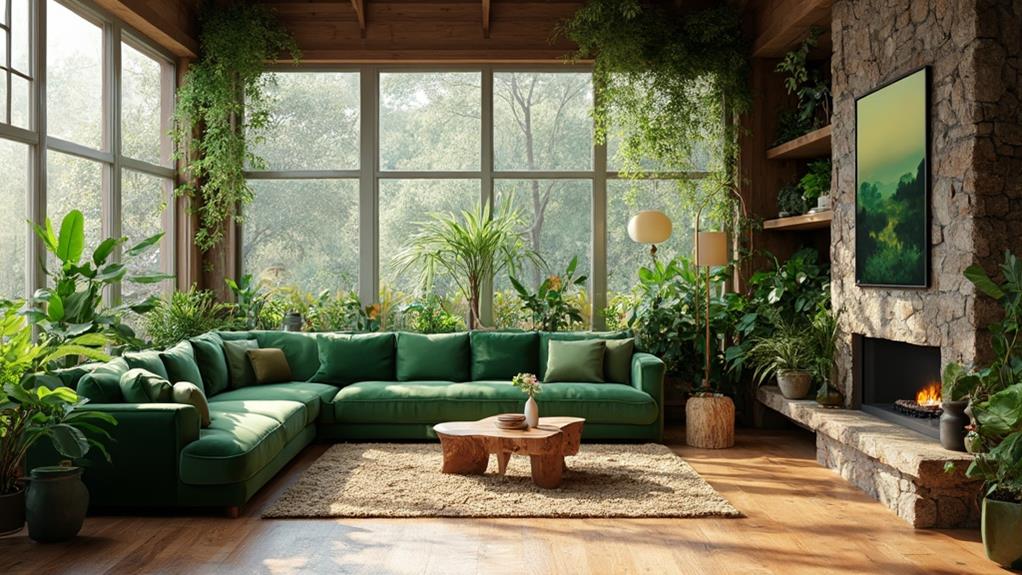


Incorporating biophilic design into your home renovation can create a more harmonious living environment. Start by maximizing natural light and views with large windows and strategically placed skylights. Use organic materials like reclaimed wood, natural stone, and clay tiles to add warmth and texture. Introduce indoor plants and green walls to purify the air and bring nature indoors. Consider water features for soothing soundscapes, and integrate biomorphic forms and patterns in furniture and decor. These elements not only enhance aesthetic appeal but also promote well-being and reduce stress. By thoughtfully blending these natural elements, you can transform your home into a calming sanctuary that nurtures a deeper connection with nature.
Natural Light and Views
Three key elements of natural light and views in biophilic design are large windows, strategically placed skylights, and glass doors. These features not only flood interior spaces with natural light but also create visual connections to the outdoors, enhancing the occupants' sense of well-being and connection to nature.
Large windows serve as portals to the external environment, framing scenic views and allowing ample daylight to penetrate deep into living spaces. They can be designed to maximize solar gain in winter and minimize heat absorption in summer, contributing to energy efficiency.
Skylights introduce overhead illumination, brightening otherwise dark areas and creating a sense of spaciousness. When positioned thoughtfully, they can capture different angles of sunlight throughout the day, adding dynamic lighting effects to interiors.
Glass doors, particularly sliding or French doors, blur the boundaries between indoor and outdoor spaces. They facilitate seamless transitions to patios, balconies, or gardens, encouraging inhabitants to engage more frequently with nature. Additionally, these transparent barriers maintain visual continuity with the surrounding landscape even when closed, preserving the biophilic connection year-round.
Organic Materials and Textures
Within the realm of biophilic design, organic materials and textures play a crucial role in creating spaces that resonate with our innate connection to nature. By incorporating natural elements like wood, stone, clay, and bamboo into your home renovation, you can evoke a sense of warmth, authenticity, and tranquility. These materials not only provide visual appeal but also offer tactile experiences that engage our senses and promote well-being.
Consider using reclaimed wood for flooring or accent walls, which adds character and sustainability to your space. Natural stone, such as marble or slate, can be utilized for countertops or feature walls, bringing in unique patterns and textures. Incorporate woven textiles, like jute or sisal rugs, to add depth and organic texture underfoot. Clay or terracotta tiles can be used for backsplashes or flooring, providing earthy tones and a connection to the ground. Bamboo, a rapidly renewable resource, is excellent for cabinetry or decorative elements. By thoughtfully integrating these organic materials and textures, you can create a harmonious living environment that celebrates the beauty of nature and enhances your overall well-being.
Indoor Plants and Green Walls
Building upon the foundation of organic materials and textures, indoor plants and green walls represent a dynamic way to infuse living nature into your home renovation. These elements not only enhance the aesthetic appeal of your space but also contribute to improved air quality and overall well-being.
When incorporating indoor plants, consider a variety of species that thrive in different light conditions and require varying levels of maintenance. Low-light options like snake plants and pothos are ideal for dimly lit areas, while fiddle leaf figs and monstera deliciosa can serve as stunning focal points in brighter spaces. Hanging plants and cascading varieties add visual interest to shelves and windowsills.
Green walls, also known as living walls, take biophilic design to the next level. These vertical gardens can be customized to fit any space, from small accent walls to expansive installations. Modular systems make installation and maintenance more manageable, while self-watering options reduce upkeep. When designing a green wall, consider a mix of textures, colors, and plant heights to create a visually captivating and dynamic living art piece that brings nature indoors.
Water Features and Soundscapes
The gentle trickle of water can transform a living space, evoking a sense of tranquility and connection to nature. Water features and soundscapes are essential elements in biophilic design, offering both visual and auditory stimulation that mimics natural environments. These additions can range from small tabletop fountains to larger, custom-built water walls or outdoor ponds.
Indoor water features like wall-mounted fountains or freestanding water columns can serve as focal points while providing soothing ambient sounds. For a more subtle approach, consider installing a small bubbling rock feature or a zen-inspired water basin.
Outdoor spaces benefit from the integration of reflecting pools, cascading waterfalls, or naturalistic streams that wind through the landscape.
Soundscapes can be created using water features or through the strategic placement of wind chimes, bamboo water spouts, or even digital sound systems that reproduce nature's acoustics. These auditory elements help mask unwanted noise pollution and create a more serene atmosphere. When incorporating water features, it's crucial to consider maintenance requirements, water conservation, and the overall aesthetic of your space to ensure a harmonious integration with your home's design.
Biomorphic Forms and Patterns
While water features bring nature's sounds into our homes, biomorphic forms and patterns capture its visual essence. These design elements mimic the shapes, patterns, and textures found in nature, creating a subtle yet powerful connection to the natural world. Incorporating biomorphic forms can be achieved through various means, including furniture selection, architectural details, and decorative elements.
Curved lines and organic shapes in furniture pieces, such as rounded tables or asymmetrical chairs, evoke natural forms and create a sense of flow within a space. Wallpapers or textiles featuring leaf patterns, tree bark textures, or honeycomb structures can add visual interest while reinforcing the biophilic theme. Architectural elements like spiral staircases or undulating walls can also embody biomorphic principles.
When implementing biomorphic forms and patterns, it's crucial to maintain balance and avoid overwhelming the space. Subtle integration often proves more effective than bold statements. Consider using these elements as accent pieces or focal points, allowing them to complement rather than dominate the overall design. By thoughtfully incorporating biomorphic forms and patterns, homeowners can create spaces that feel harmonious, calming, and deeply connected to nature.
Frequently Asked Questions
How Much Does Biophilic Design Typically Add to Renovation Costs?
Biophilic design costs can vary widely, typically adding 5-20% to renovation expenses. Factors influencing cost include the extent of natural elements incorporated, materials used, and complexity of implementation. Simple changes may have minimal impact on overall budget.
Can Biophilic Design Principles Be Applied to Small Apartments or Studios?
Nestled in cozy spaces, nature's embrace can flourish. Biophilic design principles are indeed adaptable to compact living quarters. Through strategic use of natural materials, plants, and light, even the smallest apartments can become rejuvenating, nature-inspired sanctuaries.
Are There Any Potential Drawbacks or Maintenance Issues With Biophilic Design Elements?
Potential drawbacks of biophilic design elements include increased maintenance requirements, such as watering plants and cleaning natural materials. Some elements may attract pests or allergens. Cost considerations and potential water damage are also factors to consider when implementing these features.
How Does Biophilic Design Impact Property Value and Resale Potential?
Imagine a garden where property values bloom like flowers. Biophilic design can enhance a home's market appeal, potentially increasing resale value. Buyers often appreciate nature-inspired elements, viewing them as unique, wellness-promoting features that set a property apart.
Are There Specific Certifications or Qualifications for Biophilic Design Professionals?
While there's no specific certification for biophilic design professionals, many practitioners hold qualifications in architecture, interior design, or landscape architecture. Some organizations offer courses and certifications in sustainable design, which often include biophilic principles as a component.
Conclusion
Incorporating biophilic design elements into home renovations offers numerous benefits for occupants' well-being and environmental connectivity. By prioritizing natural light, organic materials, indoor greenery, water features, and biomorphic patterns, homeowners can create spaces that foster a deeper connection with nature. This approach not only enhances aesthetic appeal but also promotes psychological and physiological health. As the saying goes, "A house without biophilia is like a VCR without a remote" – functional, but lacking in user-friendly charm and natural harmony.