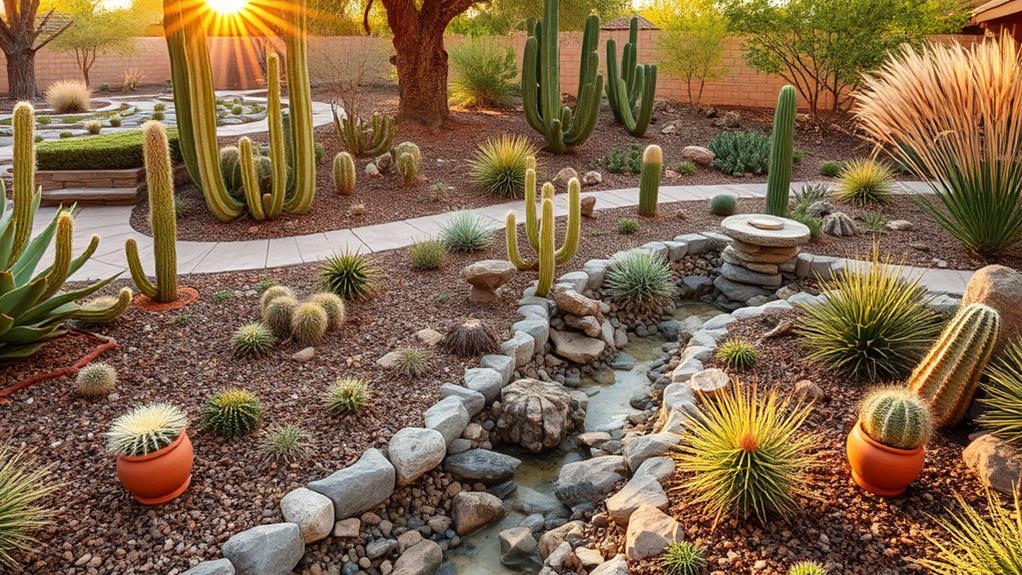


To create a drought-resistant landscape, start by choosing native plants adapted to your local climate. Implement xeriscaping principles by reducing lawn size and grouping plants with similar water needs. Install efficient irrigation systems like drip lines or soaker hoses, and use smart controllers to optimize watering schedules. Apply a thick layer of organic mulch around plants to retain moisture and improve soil health. Replace portions of your lawn with permeable hardscaping or drought-tolerant groundcovers. Don't forget to incorporate decorative elements like rock gardens or dry creek beds for visual interest. By following these techniques, you'll be well on your way to a water-wise, low-maintenance yard that thrives in dry conditions.
Choose Native Plants
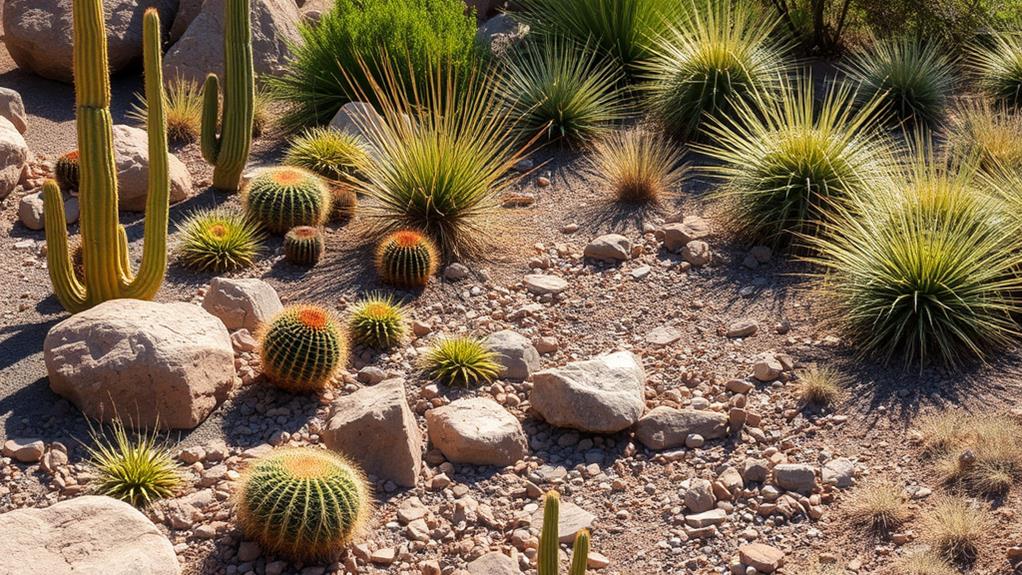
When it comes to drought-resistant landscaping, native plants are your best allies. These species have adapted to your local climate and soil conditions over thousands of years, making them naturally resilient to drought. They've developed deep root systems that can access water from lower soil layers, reducing the need for frequent watering.
To choose the right native plants, research your area's indigenous flora or consult local nurseries specializing in native species. Look for plants that thrive in your specific microclimate, considering factors like sun exposure, soil type, and drainage. You'll find a diverse range of options, from colorful wildflowers to hardy shrubs and trees.
Native plants offer more than just water efficiency. They're often low-maintenance, requiring less fertilizer and pest control. They also provide habitat and food for local wildlife, supporting your area's ecosystem. By incorporating these plants, you'll create a landscape that's both beautiful and environmentally responsible.
When planning your drought-resistant garden, group plants with similar water needs together. This practice, known as hydrozoning, allows for more efficient irrigation and prevents overwatering. Remember, even native plants need regular watering during their establishment period, typically the first year after planting.
Implement Xeriscaping Principles
Building on the concept of using native plants, it's time to explore xeriscaping principles. Xeriscaping is a landscaping method that minimizes water usage while maintaining an attractive outdoor space. You'll want to start by creating a comprehensive plan that divides your yard into zones based on water needs.
Reduce your lawn size and replace grass with drought-tolerant groundcovers or hardscaping elements like gravel or pavers. Group plants with similar water requirements together to maximize irrigation efficiency. Incorporate organic mulch around plants to retain moisture and suppress weeds.
Design efficient irrigation systems, such as drip irrigation or soaker hoses, that deliver water directly to plant roots. Install rain barrels to collect and store rainwater for use during dry periods. Create slight slopes in your landscape to direct water runoff towards planted areas.
Use permeable surfaces for pathways and driveways to allow water to seep into the ground rather than run off. Consider adding shade structures or trees to reduce evaporation and protect more delicate plants. Regularly maintain your landscape by pruning, weeding, and adjusting irrigation as needed to ensure optimal water conservation.
Efficient Irrigation Systems
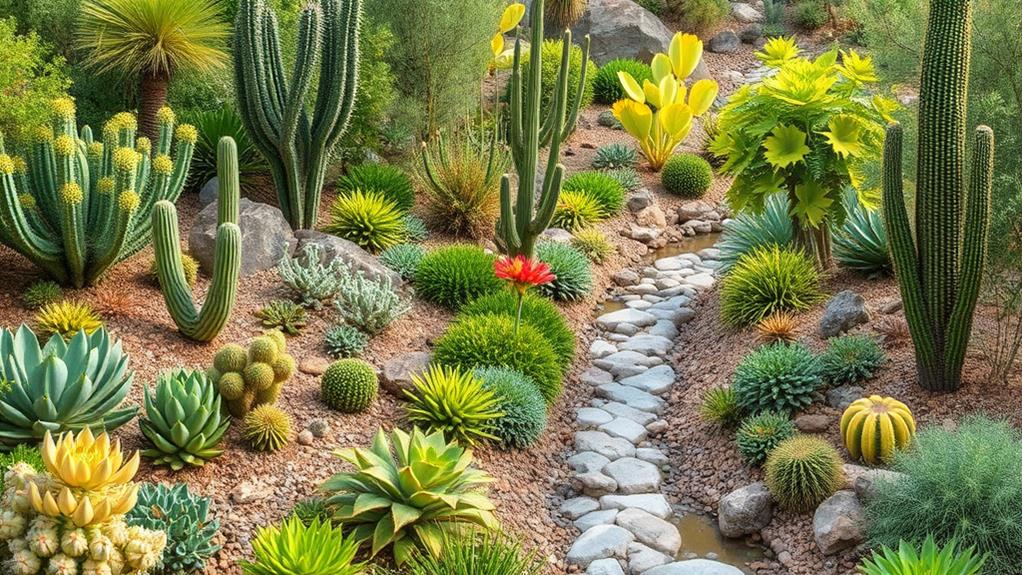
To maximize water conservation in your drought-resistant landscape, implementing an efficient irrigation system is crucial. Start by installing a smart controller that adjusts watering schedules based on weather conditions and soil moisture levels. This technology can reduce water waste by up to 30%.
Opt for drip irrigation or soaker hoses instead of traditional sprinklers. These systems deliver water directly to plant roots, minimizing evaporation and runoff. You'll use up to 50% less water compared to conventional methods. Group plants with similar water needs together and create hydrozones to further optimize your irrigation system's efficiency.
Consider installing rain sensors and soil moisture sensors to prevent overwatering. These devices will automatically shut off your irrigation system when it's raining or when the soil has adequate moisture. Don't forget to regularly maintain your system by checking for leaks, adjusting sprinkler heads, and cleaning filters.
Lastly, water your landscape during early morning or late evening hours to reduce evaporation. This timing allows water to penetrate the soil and reach plant roots more effectively. By implementing these efficient irrigation techniques, you'll conserve water while maintaining a healthy, drought-resistant landscape.
Mulching and Soil Management
Proper mulching and soil management are essential components of a successful drought-resistant landscape. Mulch helps retain moisture, suppress weeds, and regulate soil temperature. Apply a 2-3 inch layer of organic mulch around plants, trees, and shrubs, keeping it away from stems to prevent rot. Choose materials like wood chips, straw, or compost for their water-retention properties.
Improve your soil's structure by adding organic matter, which increases its water-holding capacity. Incorporate compost or well-rotted manure into the top 6-8 inches of soil before planting. This amendment also enhances nutrient availability and promotes healthy root growth.
Consider using soil conditioners like hydrogels or wetting agents to further increase water retention. These products can be particularly useful in sandy soils that drain quickly. Additionally, use ground covers or living mulches to protect soil from erosion and reduce evaporation.
Regularly test your soil pH and nutrient levels, adjusting as needed to maintain optimal growing conditions. Avoid over-fertilizing, as this can lead to excessive growth and increased water demands. Instead, opt for slow-release fertilizers that provide steady nutrition without promoting rapid, water-hungry growth.
Hardscaping and Groundcover Alternatives
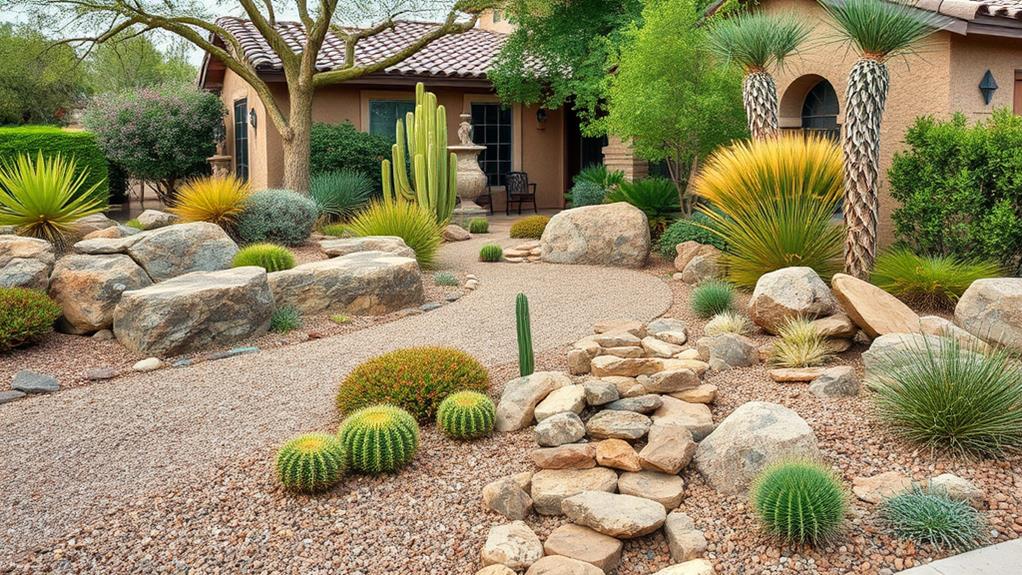
While soil management plays a key role in drought-resistant landscapes, incorporating hardscaping and groundcover alternatives can significantly reduce water needs. Consider replacing portions of your lawn with hardscaping elements like patios, walkways, or rock gardens. These features not only conserve water but also add visual interest to your yard.
Opt for permeable materials such as gravel, decomposed granite, or porous pavers to allow rainwater to seep into the ground. This approach helps maintain soil moisture and reduces runoff. For areas where you want plant coverage, explore drought-tolerant groundcover options. Sedums, creeping thyme, and ornamental grasses are excellent choices that require minimal watering once established.
You can also incorporate decorative elements like dry creek beds or rock mulch to mimic natural landscapes while eliminating the need for irrigation. Don't forget vertical spaces – install living walls with drought-resistant plants or use trellises for climbing vines. These additions create visual appeal without increasing water demands. By strategically combining hardscaping and water-wise groundcovers, you'll create a stunning, low-maintenance landscape that thrives in dry conditions while conserving precious water resources.
Conclusion
You've learned the essentials of drought-resistant landscaping, but remember, it's not just about survival—it's about thriving. Like a cactus in the desert, your garden can be both resilient and beautiful. By embracing these techniques, you'll create a landscape that sips water rather than guzzles it. In fact, xeriscaping can reduce water use by 50-75%. So go ahead, transform your yard into a water-wise oasis that'll be the envy of the neighborhood.