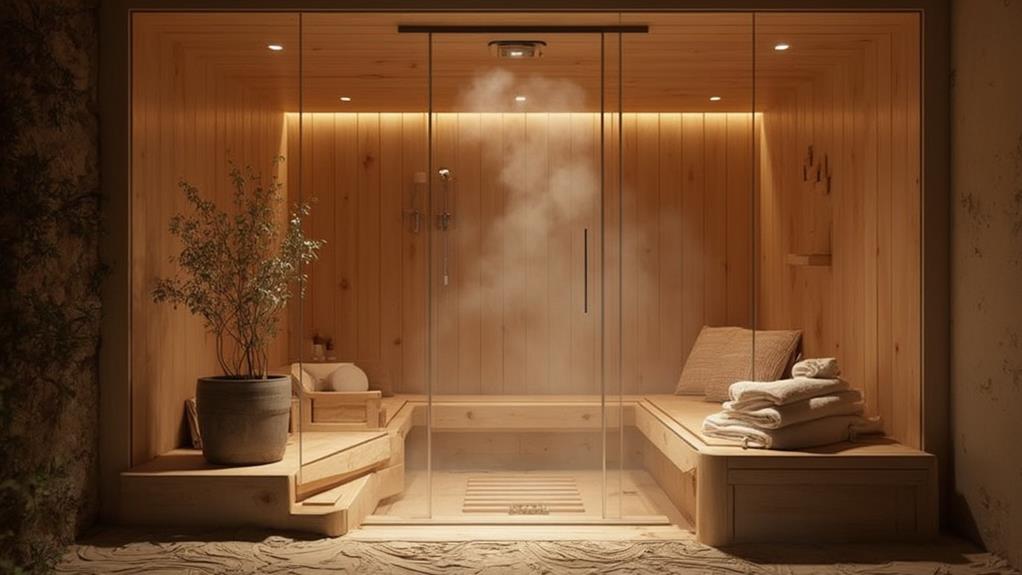


When designing a home sauna or steam room, consider key differences between the two: saunas use dry heat at higher temperatures, while steam rooms offer moist heat at lower temperatures. Space requirements, location, and budget are crucial factors. Choose appropriate heating systems and power sources, select suitable materials for construction, and ensure proper ventilation and moisture control. Implement essential safety features, such as temperature controls and non-slip surfaces. Don't forget amenities and accessories for comfort and relaxation. By carefully addressing these aspects, you'll create a personalized wellness retreat that meets your specific needs and preferences. This guide explores each consideration in detail.
Sauna vs. Steam Room
When considering a home wellness space, understanding the key differences between saunas and steam rooms is essential. Saunas typically operate at higher temperatures (160-200°F) with low humidity, while steam rooms maintain lower temperatures (110-120°F) with nearly 100% humidity. This fundamental distinction affects the user experience and potential health benefits.
Saunas use dry heat, often generated by heated rocks, and may offer a wood-burning or electric option. The dry air promotes sweating and is believed to aid in detoxification, muscle relaxation, and improved circulation.
In contrast, steam rooms use a generator to produce moist heat, creating a more humid environment. This can be beneficial for respiratory health, skin hydration, and opening pores.
Construction requirements also differ. Saunas need well-insulated walls and heat-resistant materials, often utilizing cedar or hemlock wood. Steam rooms require non-porous surfaces like tile or stone to prevent moisture damage and mold growth. Additionally, ventilation systems are crucial in both, but steam rooms demand more robust moisture management. Consider your personal preferences, health goals, and space constraints when choosing between a sauna and steam room for your home.
Space and Location Requirements
Typically, the space and location requirements for a home sauna or steam room are critical factors in the planning process. Both options require a dedicated area with proper insulation and ventilation.
For a sauna, you'll need approximately 15-20 square feet per person, with a minimum ceiling height of 7 feet. Steam rooms generally require less space, about 10-15 square feet per person, but need a sloped ceiling to prevent water droplets from falling on occupants.
When selecting a location, consider proximity to water and electrical sources. Basements, garages, or unused rooms are popular choices. Ensure the space can accommodate proper drainage and waterproofing, especially for steam rooms.
Both types require a nearby shower area for cooling off and rinsing.
The location should also allow for easy installation of necessary equipment, such as heaters for saunas or steam generators for steam rooms. Additionally, consider the impact on surrounding areas, as both options produce heat and moisture. Proper insulation and ventilation will help contain these effects and prevent damage to adjacent spaces.
Budget Planning
Establishing a realistic budget is crucial when planning a home sauna or steam room. The costs can vary significantly depending on factors such as size, materials, and features. A basic prefabricated sauna kit may start around $2,000, while a custom-built luxury steam room could exceed $20,000 or more.
Key budget considerations include the type of heating system, insulation, ventilation, and interior finishes. Electric heaters are generally less expensive than wood-burning stoves, but ongoing operational costs may differ. High-quality insulation and vapor barriers are essential for energy efficiency and longevity. Ventilation systems and proper drainage are necessary for both safety and comfort.
Interior finishes such as benches, lighting, and accessories can also impact the budget. Cedar is a popular choice for sauna interiors due to its durability and pleasant aroma, but it comes at a higher cost than alternatives like hemlock. Additionally, factor in expenses for electrical work, plumbing, and possibly structural modifications to your home. It's advisable to allocate an extra 10-15% of your total budget for unforeseen expenses or upgrades during the project.
Heating Systems and Power Sources
The heart of any sauna or steam room lies in its heating system and power source. For saunas, traditional wood-burning stoves provide an authentic experience but require proper ventilation and regular maintenance. Electric heaters are more common in home installations, offering convenience and precise temperature control. Infrared heating systems are gaining popularity for their energy efficiency and ability to penetrate the skin directly.
Steam rooms rely on steam generators, which require a dedicated electrical circuit and water supply. The size of the generator depends on the room's volume and desired humidity levels. Both saunas and steam rooms benefit from digital control panels for accurate temperature and humidity regulation.
When selecting a power source, consider your home's electrical capacity. Saunas typically require 220-240V circuits, while steam generators may need 208-240V. Ensure your electrical system can handle the additional load, and consult a licensed electrician for installation. For off-grid or eco-friendly options, solar-powered systems are available but require significant initial investment. Proper insulation and sealing are crucial for maintaining efficient heating in both saunas and steam rooms, regardless of the chosen heating system.
Materials and Construction
Selecting the right materials and employing proper construction techniques are fundamental aspects of creating a durable and effective sauna or steam room. For saunas, cedar is the preferred wood due to its resistance to moisture, pleasant aroma, and durability. Alternatively, hemlock or Nordic spruce can be used. The walls and ceiling should be insulated with a vapor barrier to prevent moisture damage to the surrounding structure.
For steam rooms, non-porous materials like tile, glass, or acrylic panels are essential to withstand high humidity levels. Proper waterproofing and drainage systems are crucial to prevent water damage and mold growth. The floor should be slip-resistant and slightly sloped for water runoff.
Both saunas and steam rooms require proper ventilation to maintain air quality and regulate temperature. Install vents near the floor and ceiling to create airflow. The door should be made of tempered glass or wood with proper sealing to maintain temperature and humidity levels.
Construction should prioritize creating an airtight environment to maximize energy efficiency. Pay attention to sealing joints and corners, and use appropriate adhesives and sealants designed for high-temperature and high-humidity environments.
Ventilation and Moisture Control
For both saunas and steam rooms, effective ventilation and moisture control are critical to maintaining a healthy and comfortable environment. Proper airflow prevents the accumulation of excess humidity, mold growth, and unpleasant odors. In saunas, a small vent near the floor and another near the ceiling create natural convection, allowing fresh air to circulate. Steam rooms require mechanical ventilation systems to manage higher humidity levels.
Moisture control is essential to protect the structure and surrounding areas from water damage. Vapor barriers should be installed behind walls and ceilings to prevent moisture from seeping into the building envelope. In steam rooms, sloped ceilings (at least 2 inches per foot) direct condensation to the walls, preventing water from dripping onto occupants.
Proper drainage is crucial in both saunas and steam rooms. Install floor drains to remove excess water and incorporate waterproof flooring materials. In steam rooms, use non-porous surfaces like tile or stone to resist moisture absorption. Regular maintenance, including wiping down surfaces and allowing the space to dry completely between uses, helps control moisture and extend the life of your sauna or steam room.
Safety Features
Considering the potential risks associated with high temperatures and humidity, incorporating essential safety features in your home sauna or steam room is paramount. Begin by installing a thermometer and hygrometer to monitor temperature and humidity levels accurately. Ensure that the heating element is securely mounted and properly insulated to prevent accidental contact and fire hazards.
Install a timer with an automatic shut-off feature to prevent overheating and conserve energy. Include non-slip flooring or mats to reduce the risk of falls on wet surfaces. Proper lighting is crucial for safety; use moisture-resistant, heat-tolerant fixtures. Install an emergency call button or alarm system within easy reach for users to summon help if needed.
For steam rooms, incorporate anti-scald devices on steam outlets to prevent burns. In both saunas and steam rooms, ensure proper sealing of electrical components to protect against moisture damage. Install a carbon monoxide detector if using a gas-fired heater. Finally, post clear safety guidelines and usage instructions near the entrance, including recommended time limits, hydration advice, and warnings for individuals with certain health conditions. Regular maintenance and inspections are essential to ensure all safety features remain functional and effective.
Additional Amenities and Accessories
A well-appointed home sauna or steam room can be enhanced with carefully chosen amenities and accessories that elevate the user experience. Consider incorporating built-in seating options, such as ergonomic benches or reclined loungers, to maximize comfort during sessions. Adjustable lighting systems, including chromotherapy options, can create a soothing ambiance and potentially offer therapeutic benefits.
For convenience, install hooks or shelving units near the entrance for towels and robes. A water dispenser or drinking fountain promotes hydration, while a shower area allows for quick cool-downs between heat sessions. Aromatherapy diffusers can introduce calming scents, enhancing relaxation.
Entertainment options like waterproof speakers or integrated audio systems enable users to enjoy music or guided meditations. For steam rooms, consider adding a eucalyptus steam generator for its invigorating aroma and potential respiratory benefits. Hygrometers and thermometers help monitor humidity and temperature levels, ensuring optimal conditions.
Lastly, don't overlook the importance of proper ventilation. Install adjustable vents or small fans to control airflow and prevent excessive humidity buildup. These thoughtful additions can transform a basic sauna or steam room into a luxurious, multisensory retreat within your home.
Frequently Asked Questions
How Long Does It Take to Install a Home Sauna or Steam Room?
The installation time for a home sauna or steam room varies depending on factors such as size, type, and complexity. Generally, it can take anywhere from a few days to several weeks for professional installation to be completed.
Can I Convert an Existing Bathroom Into a Steam Room?
Turning your bathroom into a steam room? It's not just a pipe dream! Yes, you can convert an existing bathroom into a steam room. However, proper waterproofing, ventilation, and steam generator installation are essential for a successful transformation.
Are There Any Health Risks Associated With Regular Sauna or Steam Room Use?
Regular sauna or steam room use is generally considered safe for healthy individuals. However, potential risks include dehydration, overheating, and exacerbation of certain health conditions. It's advisable to consult a healthcare professional before beginning frequent sauna or steam room sessions.
How Often Should I Perform Maintenance on My Sauna or Steam Room?
Time flies when you're enjoying your sauna, but don't forget maintenance! Perform a thorough cleaning weekly, inspect electrical components monthly, and schedule professional servicing annually. Regular upkeep ensures longevity and optimal performance of your sauna or steam room.
What's the Ideal Duration and Frequency for Using a Sauna or Steam Room?
The ideal duration for sauna or steam room sessions is typically 15-20 minutes, with a frequency of 2-3 times per week. However, individual tolerance varies, so it's essential to listen to your body and consult a healthcare professional if needed.
Conclusion
Designing a home sauna or steam room requires careful consideration of numerous factors, from spatial requirements to safety features. The journey from concept to completion is no walk in the park, but thorough planning ensures a successful outcome. By addressing key elements such as heating systems, materials, ventilation, and moisture control, homeowners can create a luxurious retreat that promotes relaxation and well-being. Ultimately, a well-designed sauna or steam room adds value to the home and enhances overall quality of life.