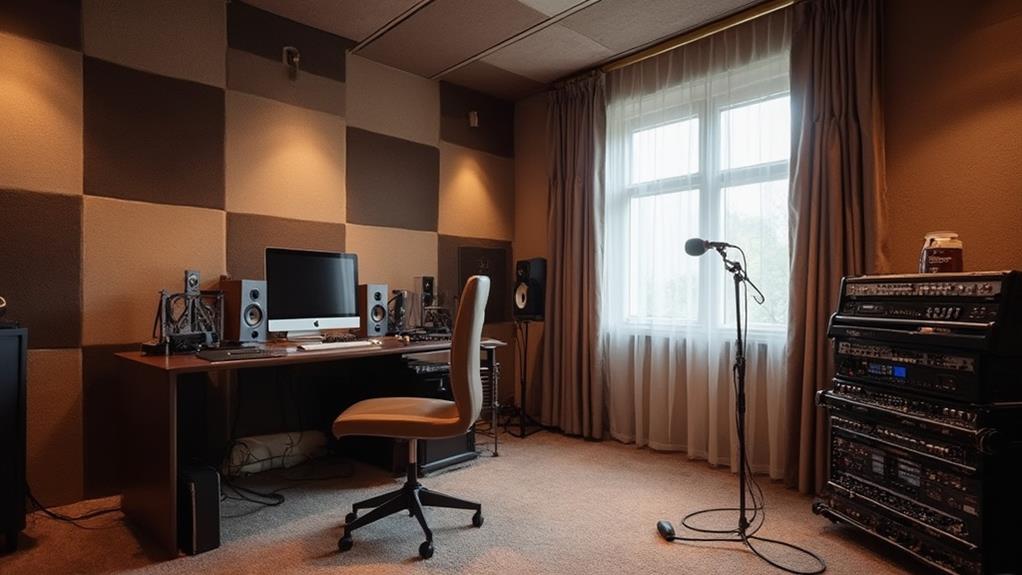


Creating a home recording studio involves careful acoustic considerations and design. Start by selecting a suitable room, ideally medium-sized with asymmetrical dimensions. Assess acoustic challenges, including external noise sources and problematic room resonances. Implement soundproofing techniques to isolate the space, and use sound absorption materials strategically to control reflections. Incorporate diffusion strategies to scatter sound waves and create a balanced acoustic environment. Optimize the studio layout for workflow efficiency and proper monitor placement. Consider budget-friendly DIY solutions for acoustic treatments. By addressing these key aspects, you'll be well on your way to achieving professional-quality sound in your home studio. Explore further to uncover more advanced techniques and refinements.
Choosing the Right Room
The foundation of any successful home recording studio lies in selecting an appropriate space. When choosing the right room, consider factors such as size, shape, and existing acoustic properties. Ideally, opt for a medium-sized room with asymmetrical dimensions to minimize standing waves and flutter echoes. Avoid perfect squares or cubes, as these can create problematic resonances.
Look for a room with minimal external noise interference, such as traffic or household activities. Basements or interior rooms often work well due to their natural isolation. Consider the room's ceiling height; higher ceilings provide more space for sound diffusion and absorption.
Assess the room's existing surfaces. Hard, reflective surfaces like bare walls and windows can create unwanted reverberations, while carpeted floors and furnished spaces offer some inherent acoustic dampening. Evaluate potential locations for your workstation, keeping in mind power outlets, ventilation, and natural light.
Assessing Acoustic Challenges
Once you've selected a suitable room for your home recording studio, it's crucial to assess its acoustic challenges. Begin by identifying potential sources of external noise, such as traffic, neighbors, or HVAC systems. Evaluate the room's shape and dimensions, as these factors influence sound reflections and standing waves. Pay attention to parallel walls, which can create flutter echoes and frequency imbalances.
Next, consider the room's existing surfaces and materials. Hard, reflective surfaces like bare walls, windows, and hardwood floors can cause excessive reverberation and unwanted reflections. Conversely, rooms with too much absorption may sound unnaturally dead. Assess the presence of bass traps in corners, as these areas often accumulate low-frequency energy.
Listen carefully to the room's natural sound by clapping, speaking, or playing music. Note any areas where the sound seems uneven or colored. Use a real-time analyzer (RTA) app or professional measurement tools to identify problematic frequencies and acoustic anomalies. This data will guide your decisions on acoustic treatment placement and help you create a balanced listening environment for accurate recording and mixing.
Soundproofing Techniques
Isolation forms the foundation of effective soundproofing in a home recording studio. To achieve this, consider implementing multiple layers of dense materials to block sound transmission. Start by sealing any air gaps around doors, windows, and electrical outlets. Install weatherstripping and door sweeps to minimize sound leakage.
For walls, floors, and ceilings, employ mass-loaded vinyl (MLV) between layers of drywall to dampen sound. Resilient channels can be used to decouple the drywall from the framing, further reducing sound transfer. Acoustic panels and bass traps strategically placed around the room help absorb sound reflections and low-frequency buildup.
Floating floors, constructed using isolation pads or rubber mats, can significantly reduce impact noise and vibrations. For ceilings, consider a drop ceiling system with sound-absorbing tiles. Windows, often the weakest link in soundproofing, can be addressed with soundproof curtains or custom-built window plugs.
Remember that true soundproofing is challenging and often expensive. Focus on the most critical areas first, and consider professional consultation for optimal results. Balancing your budget with the desired level of isolation is key to creating an effective home recording environment.
Sound Absorption Materials
While soundproofing focuses on blocking sound transmission, sound absorption materials play a complementary role in shaping the acoustic environment within your home recording studio. These materials work by reducing sound reflections and controlling reverberation, resulting in a cleaner, more accurate sound.
Common sound absorption materials include acoustic foam panels, bass traps, and diffusers. Acoustic foam panels are versatile and effective at absorbing mid to high-frequency sound waves. They come in various shapes and sizes, with wedge or pyramid designs being popular choices.
Bass traps, typically placed in room corners, target low-frequency sounds that can otherwise build up and muddy your recordings.
Diffusers scatter sound waves, preventing strong reflections and creating a more balanced acoustic environment. They can be made from wood, plastic, or other materials and often feature irregular surfaces to break up sound waves effectively.
When selecting and placing sound absorption materials, consider the specific needs of your space. Strategically position panels on walls and ceilings, focusing on areas where sound reflections are most problematic. Remember that a balance between absorption and reflection is crucial for achieving optimal acoustics in your home recording studio.
Diffusion Strategies
Diffusion strategies play a crucial role in creating a balanced acoustic environment within a home recording studio. These techniques help scatter sound waves in multiple directions, reducing unwanted reflections and creating a more natural, spacious sound. Effective diffusion can minimize flutter echoes, comb filtering, and standing waves, resulting in a more accurate listening experience.
Common diffusion methods include the use of geometric shapes, such as pyramids, quadratic residue diffusers, and polycylindrical diffusers. These can be commercially purchased or DIY-constructed using materials like wood or foam. Strategic placement of bookshelves, uneven surfaces, and irregularly shaped objects can also contribute to sound diffusion.
When implementing diffusion strategies, it's essential to consider the room's size, shape, and intended use. Larger spaces may require more extensive diffusion treatment, while smaller rooms might benefit from a combination of absorption and diffusion techniques. Placing diffusers on walls opposite absorption panels can create a balanced acoustic environment. Additionally, ceiling diffusion can help control reflections from above, further improving the overall sound quality in the studio.
Studio Layout Optimization
Efficiency lies at the heart of studio layout optimization, a critical aspect of creating a functional home recording space. The arrangement of equipment, furniture, and acoustic treatments should facilitate seamless workflow and minimize potential interference. Begin by positioning your primary workstation, typically housing your computer and audio interface, in a central location with easy access to other essential gear.
Consider the natural flow of movement within the space, ensuring clear pathways between different areas. Place frequently used items within arm's reach to reduce unnecessary movement during recording sessions. Organize cables and power supplies neatly to prevent tripping hazards and minimize electromagnetic interference.
Optimize speaker placement for accurate sound reproduction, typically forming an equilateral triangle with your listening position. Position acoustic panels strategically to address primary reflection points and bass traps in corners. If space allows, create dedicated zones for different activities, such as a vocal booth or instrument recording area.
Incorporate adequate lighting to reduce eye strain and create an inspiring atmosphere. Finally, maintain flexibility in your layout to accommodate future upgrades or changes in your recording needs, allowing your studio to evolve alongside your skills and projects.
Monitoring and Speaker Placement
Proper monitoring and speaker placement form the cornerstone of accurate sound reproduction in a home recording studio. The positioning of studio monitors significantly impacts the accuracy of sound perception, influencing mixing and mastering decisions. Ideally, speakers should be placed at ear level, forming an equilateral triangle with the listener's head. This configuration ensures optimal stereo imaging and frequency response.
The distance between speakers and walls is crucial. Placing monitors too close to walls can result in bass buildup and unwanted reflections. A general rule is to position speakers at least 3 feet from walls and corners. Acoustic treatment, such as bass traps and diffusers, can further enhance monitor performance by minimizing room reflections.
Consider the "38% rule" when determining listening position. This involves sitting approximately 38% of the room's length from the front wall, which often corresponds to the room's sweet spot. Use speaker stands or isolation pads to decouple monitors from surfaces, reducing unwanted vibrations. Regular calibration of monitor levels and experimenting with slight adjustments can help achieve the most accurate and balanced sound reproduction in your home studio.
Budget-Friendly DIY Solutions
While professional-grade equipment can be expensive, creating a functional home recording studio doesn't have to break the bank. Many effective acoustic treatments can be crafted using readily available materials and basic DIY skills.
For sound absorption, consider building your own acoustic panels using wooden frames, rock wool insulation, and fabric. These panels can be strategically placed to reduce room reflections and improve overall sound quality. Bass traps, essential for controlling low-frequency issues, can be constructed using similar materials but with thicker insulation.
Diffusers, which help scatter sound waves, can be created using wooden slats of varying lengths arranged in a specific pattern. For a budget-friendly alternative to commercial diffusers, repurpose old wooden pallets or create a bookshelf with irregularly placed items.
To minimize external noise, weatherstripping and door sweeps can be applied to seal gaps around doors and windows. Heavy curtains or DIY window plugs can also help reduce sound transmission.
For vocal recording, a simple reflection filter can be made using a curved piece of plywood covered with acoustic foam or thick fabric. This provides a cost-effective solution for improving vocal clarity in home recordings.
Frequently Asked Questions
How Do Humidity Levels Affect Sound Quality in a Home Recording Studio?
Humidity levels significantly impact sound quality in recording environments. High humidity can dampen sound absorption, altering acoustics and potentially causing equipment issues. Low humidity may lead to static electricity and affect instrument tuning. Maintaining optimal humidity is crucial for consistent recordings.
What Are the Best Lighting Options for a Comfortable Recording Environment?
Studies show that proper lighting can increase productivity by up to 20%. For a comfortable recording environment, consider dimmable LED panels, warm color temperature options, and indirect lighting to reduce glare and eye strain while maintaining visibility.
How Can I Incorporate Proper Ventilation Without Compromising Soundproofing?
To incorporate proper ventilation without compromising soundproofing, consider installing acoustic ventilation systems or baffled ducts. Use sound-absorbing materials around vents, implement inline duct silencers, and ensure airtight seals. Regular maintenance of HVAC systems helps minimize noise transmission.
Are There Specific Color Schemes That Enhance Creativity in Recording Spaces?
While individual preferences vary, research suggests that certain colors can influence creativity. Soft blues and greens promote calmness and focus, while vibrant yellows and oranges can stimulate energy and inspiration. Ultimately, choose colors that resonate with you personally.
How Do I Safely Manage and Organize Cables in a Home Studio Setup?
To safely manage and organize cables:
1) Label meticulously
2) Bundle logically
3) Route carefully
Utilize cable ties, conduits, and rack-mounted power strips. Implement color-coding systems, maintain proper slack, and consider cable trays for efficient organization and improved safety.
Conclusion
The creation of a home recording studio is a monumental undertaking, akin to constructing a sonic fortress. Every decision, from room selection to the placement of a single acoustic panel, can dramatically alter the sonic landscape. With meticulous attention to soundproofing, absorption, and diffusion, even the most modest space can be transformed into an audiophile's paradise. The journey from acoustic chaos to pristine sound may be arduous, but the resulting audio nirvana is worth a thousand decibels of effort.