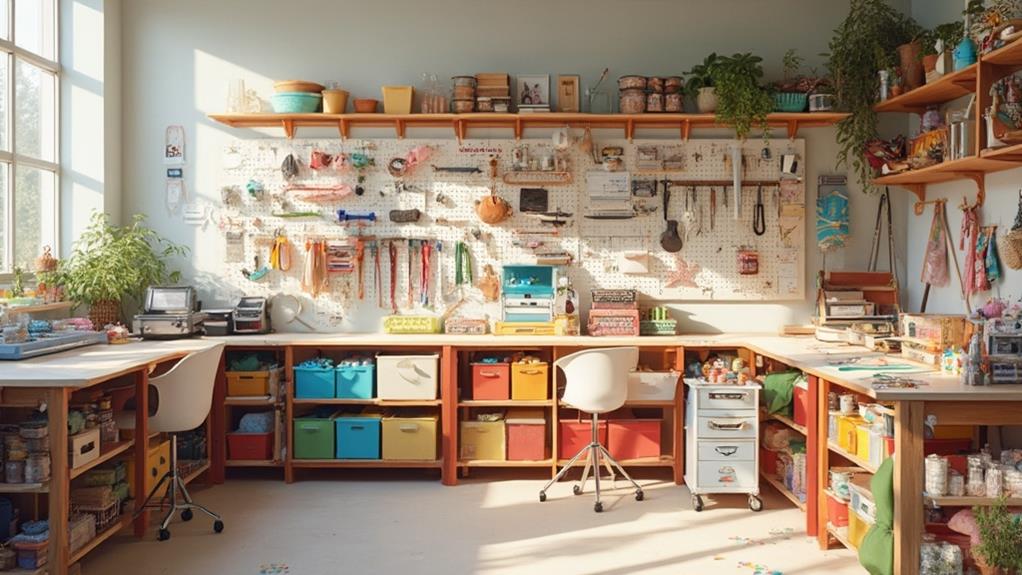


Creating an organized craft room starts with assessing your space and needs. Maximize vertical storage with wall-mounted shelving, pegboards, and tall cabinets. Set up a functional crafting station with adjustable surfaces and task lighting. Implement a color-coding system for easy supply identification. Invest in multi-functional furniture to optimize space usage. Organize supplies using clear containers and drawer dividers. Regularly declutter and rotate materials to maintain order. Establish zones for different activities and consider digitizing patterns and instructions to reduce paper clutter. By implementing these strategies, you'll create a craft room that enhances productivity and sparks creativity. Discover more tips to transform your craft space into an efficient haven.
Assessing Your Space
The first step in creating a functional craft room is to thoroughly assess your available space. Consider the room's dimensions, natural light sources, electrical outlets, and any architectural features that may impact your layout. Measure the room carefully, including windows, doors, and closets, to create an accurate floor plan.
Next, evaluate your crafting needs and habits. List all the activities you plan to do in this space, from sewing to painting to scrapbooking. This will help you determine the types of work surfaces, storage solutions, and equipment required. Consider the size and quantity of materials you need to store, as well as any large tools or machines that need dedicated space.
Assess vertical space potential, including walls and the back of doors, which can be utilized for additional storage. Look for opportunities to incorporate multi-functional furniture or built-in solutions that maximize space efficiency. Finally, consider the room's ventilation and lighting needs, especially if you work with materials that require proper air circulation or task lighting. This comprehensive assessment will form the foundation for a well-organized and efficient craft room design.
Vertical Storage Solutions
Maximizing vertical space is crucial when designing an efficient craft room. Wall-mounted shelving units offer a versatile solution for storing supplies and displaying finished projects. Consider adjustable shelving systems that can be reconfigured as your needs change.
Pegboards are another excellent option, providing customizable storage for tools and small items. Install hooks, baskets, and containers to create a modular organization system.
Tall bookcases or cabinets can house larger items and provide storage from floor to ceiling. Utilize the inside of cabinet doors by adding hanging organizers or magnetic strips for metal tools. Over-the-door organizers can transform unused space into valuable storage areas for lightweight supplies.
For fabric and paper storage, consider vertical file organizers or hanging file systems. Rolling carts with multiple tiers offer both vertical storage and mobility, allowing you to easily move supplies around your workspace. Wall-mounted rods with hanging baskets or buckets can keep frequently used items within reach while saving floor space. By implementing these vertical storage solutions, you can maximize your craft room's potential and create a more organized, efficient workspace.
Crafting Station Setup
Setting up an efficient crafting station is essential for maximizing productivity and enjoyment in your craft room. Begin by selecting a sturdy work surface that accommodates your most frequent projects. Consider a height-adjustable table to allow for both seated and standing work. Position your crafting station near natural light sources or install task lighting to reduce eye strain.
Organize frequently used tools and supplies within arm's reach. Utilize pegboards, magnetic strips, or small containers to keep items visible and accessible. Incorporate a cutting mat and a self-healing cutting surface to protect your work area. For sewing enthusiasts, designate space for your machine and ensure proper electrical outlets are nearby.
Include comfortable seating that provides proper back support for extended crafting sessions. Add a rolling cart or caddy to keep project-specific materials mobile and organized. Consider installing a bulletin board or whiteboard for inspiration and project planning. Lastly, integrate storage solutions like drawer units or shelving beneath your work surface to maximize space efficiency. By thoughtfully arranging your crafting station, you'll create a functional and inspiring environment that enhances your creative process.
Color-Coding Systems
Implementing a color-coding system in your craft room can significantly enhance organization and efficiency. This method involves assigning specific colors to different categories of supplies, tools, or projects, making it easier to locate items quickly and maintain order. Start by selecting a color palette that works for your needs, ensuring each hue is distinct enough to avoid confusion.
Apply your chosen colors to storage containers, labels, and even the spaces where items are kept. For example, use red for sewing supplies, blue for paper crafts, and green for painting materials. Extend this system to your project files, assigning colored folders or tabs to different types of ongoing work. Consider using color-coded washi tape or stickers for smaller items that can't be stored in colored containers.
To maximize the effectiveness of your color-coding system, create a legend or key that explains what each color represents. Display this prominently in your craft room for easy reference. Consistently adhering to your color system will help you quickly identify misplaced items and maintain a tidy, well-organized space. Remember to periodically review and adjust your system as your crafting needs evolve.
Multi-Functional Furniture
Craft rooms can benefit significantly from the incorporation of multi-functional furniture, which serves dual or even triple purposes in a single piece. These versatile items maximize space efficiency while providing essential storage and work surfaces. One popular option is a folding craft table with built-in shelving or drawers, allowing crafters to store supplies and equipment when not in use and expand their workspace as needed.
Another valuable addition is a modular storage system with adjustable shelves and customizable components. This type of furniture can adapt to changing needs and accommodate various crafting materials. Consider investing in an island-style workstation on casters, which can be moved around the room and features storage compartments underneath the work surface.
For seating, opt for stools or chairs with hidden storage compartments in the seat. Wall-mounted, fold-down desks or tables are excellent space-savers, providing a work area when extended and freeing up floor space when folded away. Lastly, look for ottomans or benches with lift-top lids, offering both seating and concealed storage for larger items or less frequently used supplies.
Supply Organization Techniques
Effective organization of supplies is crucial for maintaining a functional and efficient craft room. Implementing strategic organization techniques can maximize space utilization and improve workflow.
Start by categorizing supplies based on type, frequency of use, and project relevance. Use clear, labeled containers to store similar items together, making them easily identifiable and accessible.
Vertical storage solutions, such as pegboards or wall-mounted shelves, can free up valuable workspace while keeping frequently used tools within reach. Utilize drawer organizers and dividers to compartmentalize smaller items like beads, buttons, or paint tubes. For paper and fabric, consider using file cabinets or vertical document holders to prevent creasing and damage.
Color-coding systems can further enhance organization, allowing for quick identification of supplies. Implement a rotation system for consumable materials to ensure older items are used before expiring. Regularly assess and declutter your supplies, donating or discarding unused items to maintain an organized space. By employing these techniques, crafters can create a more productive environment, reducing time spent searching for materials and increasing time dedicated to creative pursuits.
Decluttering Strategies
A clutter-free craft room is essential for fostering creativity and productivity. Implementing effective decluttering strategies can transform a chaotic space into an organized haven for crafting.
Begin by sorting items into categories: keep, donate, sell, and discard. Be ruthless in your decision-making, keeping only supplies that are regularly used or hold significant value.
Adopt the "one in, one out" rule to maintain balance in your craft room. For every new item you bring in, remove an old or unused one. Establish a periodic review system, such as a quarterly assessment of your supplies and projects. This practice helps prevent accumulation and ensures your space remains functional.
Digitize patterns, instructions, and inspiration where possible to reduce paper clutter. Utilize vertical storage solutions to maximize floor space and create a more open environment.
Consider implementing a project rotation system, limiting the number of ongoing projects to prevent overwhelming your workspace. Finally, designate specific zones for different activities, such as a cutting area, sewing station, or painting corner, to maintain organization and workflow efficiency.
Frequently Asked Questions
How Can I Soundproof My Craft Room to Minimize Noise Disturbance?
To soundproof your craft room, consider installing acoustic panels, soundproof curtains, and weatherstripping around doors. Use dense materials like mass-loaded vinyl for walls and ceilings. Adding carpets, rugs, and soft furnishings can also help absorb sound.
What Lighting Options Are Best for Detailed Crafting Work?
For detailed crafting work, consider these lighting options: LED task lights, adjustable desk lamps, and natural daylight bulbs. Overhead lighting with dimmer switches and under-cabinet lights can also provide excellent illumination. Avoid harsh fluorescent lights that may cause eye strain.
How Do I Childproof a Craft Room With Potentially Hazardous Materials?
Ah, childproofing a craft room? Easy! Just bubble-wrap the entire space and call it a day. Seriously though, use locked cabinets for hazardous materials, install high shelving, and create a separate play area for children away from potentially dangerous items.
Are There Eco-Friendly Alternatives for Common Crafting Supplies and Storage Solutions?
Yes, numerous eco-friendly alternatives exist for crafting supplies and storage solutions. Consider using recycled materials, biodegradable products, and sustainable storage options like bamboo organizers or repurposed containers. Many brands now offer environmentally conscious choices for various crafting needs.
How Can I Create a Craft Room That Doubles as a Guest Room?
Imagine a room that seamlessly transitions from creative haven to welcoming guest space. To create a dual-purpose craft and guest room, utilize Murphy beds, convertible furniture, and clever storage solutions. Opt for modular systems that can be easily reconfigured as needed.
Conclusion
A well-organized craft room is the cornerstone of creative productivity. By implementing vertical storage, efficient crafting stations, color-coding systems, and multi-functional furniture, crafters can transform chaos into order. Proper supply organization and regular decluttering keep inspiration flowing like a river. With these strategies in place, a craft room becomes more than just a space—it evolves into a sanctuary where imagination thrives and artistic visions come to life, fostering a seamless blend of functionality and creative expression.