
You can take advantage of several government incentives for residential renewable energy installations. The federal tax credit allows you to claim 30% of installation costs on your taxes until 2032. Many states offer additional rebate programs and property tax exemptions. You might also benefit from net metering policies, which let you sell excess energy back to the grid. Renewable Energy Certificates provide another potential income stream. Low-interest financing options, like PACE or on-bill financing, can help manage upfront costs. By combining these incentives, you'll significantly reduce your investment and increase long-term savings. Exploring each option in detail can unlock even greater benefits.
Federal Tax Credits
Since 2005, the federal government has offered tax credits for residential renewable energy installations. These credits can significantly reduce the upfront costs of installing solar panels, wind turbines, geothermal heat pumps, and other renewable energy systems in your home.
The Residential Renewable Energy Tax Credit allows you to claim 30% of the installation costs on your federal income taxes. This credit applies to systems placed in service by December 31, 2032. After that, the credit will decrease to 26% in 2033 and 22% in 2034, before expiring in 2035 unless Congress extends it.
You'll need to file IRS Form 5695 with your tax return to claim the credit. The credit is non-refundable, meaning it can't exceed your tax liability for the year. However, you can carry over any unused portion to future tax years.
To qualify, your system must meet specific technical requirements and be certified by the manufacturer. It's crucial to keep all receipts and certification documents for your records. Remember, this credit is separate from state and local incentives, which you may be eligible for in addition to the federal credit.
State-Specific Rebate Programs
States across the country offer their own rebate programs to encourage residential renewable energy adoption. These programs vary widely in their structure, eligibility requirements, and funding levels. You'll find that some states provide upfront rebates based on system capacity, while others offer performance-based incentives that pay you for the energy your system produces over time.
To take advantage of these programs, you'll need to research what's available in your state. Many states have dedicated websites or energy offices that provide detailed information on current rebate offerings. You'll typically need to meet specific criteria, such as using certified equipment and installers, to qualify for these rebates.
It's important to act quickly when you find a suitable program, as state rebates often have limited funding and may operate on a first-come, first-served basis. Some popular rebate programs include California's Self-Generation Incentive Program, New York's NY-Sun Initiative, and Massachusetts' SMART Program. These can significantly reduce your upfront costs or provide ongoing benefits, making renewable energy more accessible and affordable for homeowners like you.
Renewable Energy Certificates
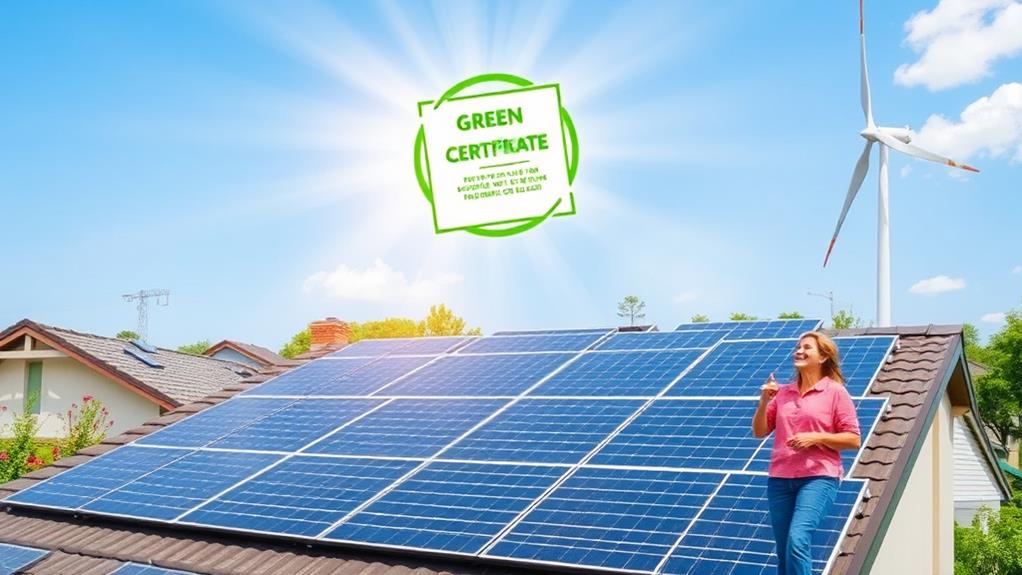
Understanding Renewable Energy Certificates (RECs) can help you maximize the benefits of your residential renewable energy system. RECs are tradable, non-tangible energy commodities that represent proof that 1 megawatt-hour (MWh) of electricity was generated from a renewable energy resource. When you install a renewable energy system, you're not just producing clean energy; you're also generating RECs.
You can sell these RECs to utilities, corporations, or other entities that want to offset their carbon footprint or meet renewable energy goals. This creates an additional revenue stream from your installation. The value of RECs varies by state and market conditions, but it can range from $1 to $300 per MWh.
To participate in the REC market, you'll need to register your system with a tracking system like WREGIS or M-RETS. These platforms verify and track REC generation and transactions. You can choose to sell your RECs directly or through an aggregator who combines RECs from multiple small producers. Remember, if you sell your RECs, you can't claim to be using renewable energy, as you've sold the environmental attributes of that energy to someone else.
Net Metering Policies
How can you maximize the financial benefits of your residential renewable energy system? Net metering policies are a key factor in achieving this goal. These policies allow you to sell excess electricity generated by your system back to the grid, effectively running your meter backward.
When your system produces more energy than you're using, you'll receive credits on your utility bill. You can then use these credits during times when your system isn't generating enough power, such as at night or on cloudy days. This arrangement helps offset your overall electricity costs and can significantly reduce your monthly bills.
Net metering policies vary by state and utility company. Some offer full retail rate credits, while others provide wholesale rates or have caps on the amount of energy you can sell back. It's crucial to understand your local net metering rules before installing a renewable energy system. You'll want to size your system appropriately to maximize your benefits under these policies. Additionally, be aware that some utilities are pushing to reduce net metering benefits, so staying informed about potential policy changes is essential to protect your investment.
Low-Interest Financing Options

While net metering can help reduce your ongoing electricity costs, the initial investment in a renewable energy system can be substantial. To ease this financial burden, many governments offer low-interest financing options for residential renewable energy installations.
You'll find various programs designed to make renewable energy more accessible. Some states provide low-interest loans directly through government agencies, while others partner with private lenders to offer reduced rates. These loans often feature extended repayment terms, sometimes up to 20 years, allowing you to spread the cost over time.
You might encounter Property Assessed Clean Energy (PACE) programs, which tie the loan to your property rather than you personally. This option allows you to repay the loan through an assessment on your property tax bill, potentially making it easier to transfer if you sell your home.
Additionally, some utility companies offer on-bill financing, where you repay the loan through your monthly electricity bill. This convenient option combines your energy savings with loan repayment, potentially resulting in a minimal increase to your overall monthly expenses.
Before choosing a financing option, compare interest rates, terms, and eligibility requirements to find the best fit for your situation.
Property Tax Exemptions
Property tax exemptions for renewable energy installations can lead to significant savings over time. When you install solar panels, wind turbines, or other renewable energy systems on your property, many states and local governments offer exemptions that prevent your property taxes from increasing due to the added value of these improvements. This means you won't be penalized for enhancing your home's energy efficiency and reducing your carbon footprint.
To take advantage of these exemptions, you'll need to check your local regulations and apply through the appropriate channels. Some jurisdictions offer full exemptions, while others may provide partial relief. The duration of these exemptions can vary, ranging from a few years to the entire lifetime of the system.
It's important to note that property tax exemptions are just one piece of the incentive puzzle. When combined with other benefits like federal tax credits, rebates, and net metering programs, they can significantly reduce the overall cost of your renewable energy investment. By leveraging these incentives, you'll not only save money on your energy bills but also contribute to a cleaner environment while potentially increasing your property's value.
Conclusion
You've explored a range of government "carrots" to sweeten the deal for home-based clean energy solutions. These incentives can help ease the financial burden of your eco-friendly aspirations. While the initial investment might seem steep, these programs aim to make green living more accessible. Remember, you're not just saving money; you're contributing to a brighter, cleaner future. So don't let the upfront costs cloud your judgment—embrace the long-term benefits of going green at home.