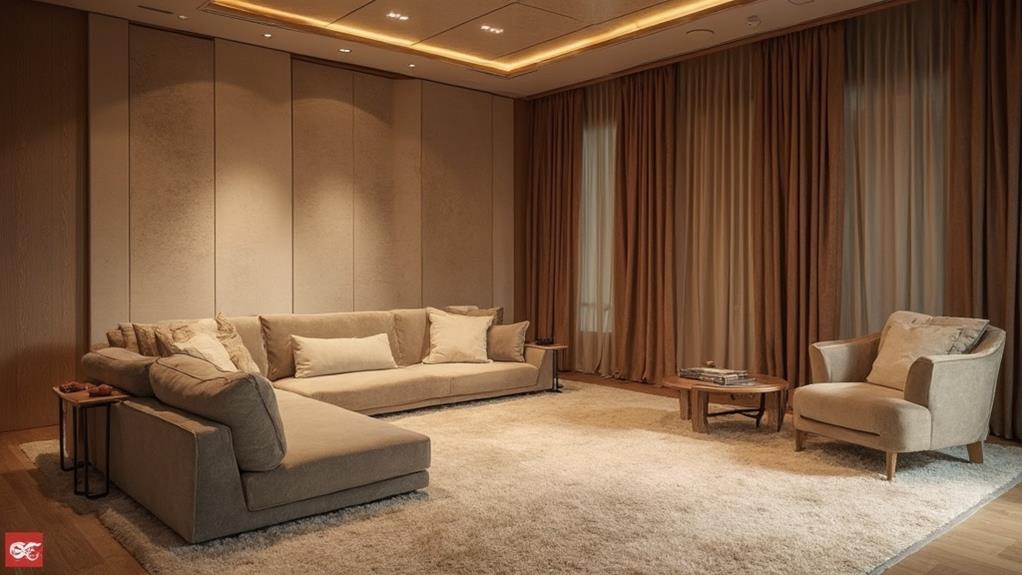


Renovating your home for better acoustics involves a multi-faceted approach. Start by assessing your space to identify problem areas and measure sound levels. Implement sound absorption techniques using acoustic panels, bass traps, and soft furnishings. Soundproof walls and ceilings by adding mass-loaded vinyl barriers and filling cavities with acoustic insulation. Choose noise-reducing flooring options like carpeting or cork. Treat windows and doors with sound-blocking materials and proper weatherstripping. Consider room layout and furniture placement to optimize sound distribution. DIY acoustic panels can be a cost-effective solution, while professional treatments offer advanced options. Balancing aesthetics with acoustic improvements ensures a harmonious living environment. The following sections explore these strategies in greater detail.
Understanding Home Acoustics
Most homeowners overlook the crucial role acoustics play in creating a comfortable living environment. Understanding home acoustics is essential for effective renovation planning and execution. Acoustics refer to how sound behaves within a space, influenced by factors such as room shape, size, and surface materials.
Sound waves interact with surfaces in three primary ways: reflection, absorption, and diffusion. Hard, flat surfaces like bare walls and floors reflect sound, potentially causing echoes or amplifying noise. Soft, porous materials absorb sound, reducing reverberation. Irregular surfaces diffuse sound, scattering it in multiple directions.
The goal of acoustic renovation is to achieve a balance between these interactions, creating a pleasant auditory environment. This involves managing both external noise intrusion and internal sound distribution. Key considerations include identifying problem areas, such as rooms with excessive echoes or spaces where outside noise penetrates easily.
Assessing the current acoustic properties of each room is crucial. This can be done through simple listening tests or more advanced methods like using sound meters. Understanding these principles allows homeowners to make informed decisions about materials, layouts, and renovation strategies to improve their home's acoustic performance.
Assessing Your Space
With a solid understanding of acoustic principles, the next step in home renovation for improved acoustics is a thorough assessment of your living space.
Begin by identifying the primary acoustic issues in each room, such as echo, reverberation, or external noise infiltration. Use a sound meter to measure decibel levels and pinpoint problematic areas.
Evaluate the room's dimensions, shape, and surface materials. Hard, flat surfaces like concrete walls or large windows can contribute to sound reflection, while carpets and curtains may absorb sound. Consider the room's function and desired acoustic environment. For example, a home theater requires different acoustic treatment than a bedroom or home office.
Analyze the existing furniture arrangement and its impact on sound propagation. Large pieces can act as natural sound barriers or reflectors. Identify potential locations for acoustic treatments, such as wall panels, bass traps, or diffusers. Pay attention to corners and parallel surfaces, which are prone to acoustic issues.
Sound Absorption Techniques
Implementing sound absorption techniques is a crucial step in improving your home's acoustics. These methods focus on reducing sound reflections and echoes within a space, creating a more balanced and pleasant auditory environment. The most effective approach involves strategically placing sound-absorbing materials throughout the room.
Acoustic panels are a popular choice, available in various sizes, shapes, and designs to suit your aesthetic preferences. These panels can be mounted on walls or ceilings to absorb mid to high-frequency sound waves. For low-frequency absorption, bass traps placed in room corners are highly effective. Soft furnishings like heavy curtains, plush carpets, and upholstered furniture also contribute significantly to sound absorption.
Diffusion is another important technique, which scatters sound waves to prevent strong reflections. Diffusers can be incorporated through textured wall surfaces, bookshelves, or specially designed acoustic diffuser panels. For a more subtle approach, consider using sound-absorbing paint or spray-on acoustic treatments. These products contain tiny ceramic microspheres that absorb sound energy, making them ideal for areas where traditional acoustic treatments may not be suitable.
Soundproofing Walls and Ceilings
Effectively soundproofing walls and ceilings is a critical step in creating a truly acoustically optimized home environment. This process involves adding mass, damping, and decoupling to existing structures to reduce sound transmission. One common technique is installing mass-loaded vinyl barriers between drywall layers, which significantly increases the wall's density and sound-blocking capabilities.
For enhanced soundproofing, consider using resilient channels or sound isolation clips when mounting new drywall. These create an air gap between the existing wall and the new layer, effectively decoupling them and minimizing vibration transfer. Filling wall cavities with acoustic insulation, such as mineral wool or fiberglass batts, further improves sound absorption.
Ceilings can be treated similarly, with the addition of a suspended ceiling system for maximum noise reduction. This involves creating a separate ceiling structure below the existing one, filled with acoustic insulation and potentially incorporating sound-absorbing panels.
For both walls and ceilings, sealing all gaps and penetrations is crucial. Use acoustic caulk around electrical outlets, light fixtures, and where walls meet floors and ceilings to prevent sound leakage. Finally, consider upgrading to soundproof doors and windows to complete your acoustically optimized space.
Flooring Solutions for Noise Reduction
Flooring plays a crucial role in managing noise levels within a home. When renovating for improved acoustics, consider materials that absorb sound and reduce impact noise transmission.
Carpeting is an excellent choice for noise reduction, as it provides a soft surface that dampens sound waves. Thick, plush carpets with dense padding underneath offer the best soundproofing properties.
For those who prefer hard flooring, cork is an exceptional option. It naturally absorbs sound and provides a comfortable walking surface. Rubber flooring is another effective choice, particularly in areas prone to high impact noise, such as home gyms or children's playrooms. Luxury vinyl plank (LVP) with an integrated underlayment can also significantly reduce noise transmission between floors.
If replacing the entire floor is not feasible, consider using area rugs or sound-absorbing floor mats in high-traffic zones. For existing hardwood floors, adding an underlayment or installing a floating floor system can improve sound insulation. Additionally, ensure that any gaps between the flooring and walls are properly sealed to prevent sound leakage. By selecting appropriate flooring materials and implementing these strategies, homeowners can significantly enhance their home's acoustic environment.
Window and Door Treatments
While flooring choices significantly impact a home's acoustics, window and door treatments also play a vital role in sound management. Windows and doors are often weak points in a home's sound insulation, allowing external noise to penetrate and internal noise to escape. To address this, consider installing double or triple-pane windows with laminated glass, which can significantly reduce sound transmission.
For existing windows, add heavy, sound-absorbing curtains or drapes to minimize noise. Cellular shades and Roman blinds can also provide acoustic benefits. Install weatherstripping around window frames and door edges to seal gaps that allow sound to pass through.
Solid core doors are superior to hollow core doors for sound insulation. For maximum effectiveness, use doors with a high Sound Transmission Class (STC) rating. Consider adding door sweeps to the bottom of doors to block sound traveling underneath.
For sliding glass doors, which are particularly problematic for acoustics, use heavy drapes or specialized acoustic curtains. In extreme cases, you might consider replacing them with French doors, which typically offer better sound insulation. These treatments not only improve acoustics but can also enhance energy efficiency and privacy in your home.
Room Layout and Furniture Placement
Beyond material choices, the layout of a room and the placement of furniture significantly influence its acoustic properties. Strategic positioning of large furniture pieces can help absorb sound and reduce echo. Place bookshelves, sofas, and armchairs along walls to minimize sound reflection.
Avoid leaving large, empty wall spaces, as these contribute to reverberation.
Consider the room's shape when arranging furniture. In rectangular rooms, position seating areas away from parallel walls to reduce standing waves. For optimal acoustics in a home theater or listening room, place speakers at an equal distance from the primary seating area, forming an equilateral triangle.
Use area rugs to dampen sound reflection from hard flooring surfaces. Position them in high-traffic areas or beneath furniture groupings. Incorporate room dividers or decorative screens to break up sound waves in large, open spaces.
When selecting furniture, opt for pieces with soft, absorbent surfaces like upholstered chairs and couches. Lastly, consider the ceiling height; in rooms with high ceilings, hanging tapestries or acoustic panels can help control sound reflections and improve overall acoustics.
DIY Acoustic Panels
Creating DIY acoustic panels offers a cost-effective solution for improving room acoustics. These panels absorb sound waves, reducing echo and reverberation, which enhances overall sound quality. To construct acoustic panels, you'll need wooden frames, insulation material, and fabric.
Begin by building a wooden frame to your desired size, typically 2'x4' or 2'x2'. Fill the frame with acoustic insulation, such as mineral wool or fiberglass, which effectively absorbs sound waves. Cover the insulation with a breathable fabric, ensuring it's stretched tightly and stapled to the frame's back.
For optimal performance, place panels strategically around the room. Focus on first reflection points, corners, and areas behind speakers or listening positions. Experiment with panel placement to achieve the best results for your specific space.
Consider using different thicknesses of insulation for varied frequency absorption. Thicker panels (4" or more) are more effective at absorbing low frequencies, while thinner panels (2") work well for mid to high frequencies. By creating a mix of panel thicknesses, you can address a broader range of acoustic issues in your room.
Professional Acoustic Treatments
Professional acoustic treatments offer a more sophisticated approach to enhancing room acoustics compared to DIY solutions. These treatments are designed and installed by experts who analyze the specific acoustic properties of a space and implement tailored solutions. Common professional treatments include custom-built diffusers, bass traps, and strategically placed absorptive panels.
One advantage of professional treatments is the use of high-quality materials engineered for optimal acoustic performance. These may include specialized foam, fiberglass, or even proprietary materials developed for specific acoustic applications. Professionals can also integrate treatments seamlessly into the room's design, ensuring both aesthetic appeal and functional effectiveness.
Advanced techniques like room mode analysis and frequency response measurements allow experts to identify and address specific acoustic issues. They can implement solutions such as tuned Helmholtz resonators for targeted low-frequency control or install reflection filters to manage early reflections. Additionally, professionals can design and install complex acoustic systems, including variable acoustic panels that allow for adjustable room characteristics, catering to different audio needs within the same space.
Balancing Aesthetics and Acoustics
A crucial consideration in home renovation for acoustics is striking the right balance between aesthetic appeal and acoustic performance. Homeowners often worry that acoustic treatments will detract from their interior design vision. However, modern acoustic solutions offer a range of visually appealing options that can complement various decor styles.
One approach is to integrate acoustic panels that double as artwork. These panels can be customized with printed designs or fabrics to match your aesthetic preferences while still providing effective sound absorption. Another option is to use decorative acoustic diffusers, which can add texture and visual interest to walls while improving sound quality.
For those who prefer a more subtle approach, consider incorporating acoustic materials into existing design elements. For example, use sound-absorbing curtains or upholstered furniture with acoustic properties. Acoustic ceiling tiles can be disguised as decorative ceiling features, and area rugs can serve both aesthetic and acoustic purposes.
When selecting materials, prioritize those that offer both visual appeal and acoustic benefits. Many manufacturers now produce aesthetically pleasing products with high acoustic performance, allowing homeowners to achieve the desired sound quality without compromising on style.
Frequently Asked Questions
How Much Does a Full Acoustic Renovation Typically Cost?
The cost of a full acoustic renovation varies widely depending on the size of the home, materials used, and extent of work required. Typically, homeowners can expect to invest between $5,000 and $50,000 for comprehensive acoustic improvements.
Can Improving Acoustics Increase My Home's Resale Value?
According to a recent survey, 60% of homebuyers consider acoustics important. Improving your home's acoustics can indeed increase its resale value. Enhanced sound quality and reduced noise transmission are attractive features that potential buyers often appreciate, potentially boosting your property's market appeal.
Are There Any Health Benefits to Better Home Acoustics?
Improved home acoustics can offer several health benefits. Better sound quality reduces stress and fatigue, enhances sleep quality, and improves overall well-being. Additionally, proper acoustic treatment can minimize external noise pollution, contributing to a more peaceful living environment.
How Long Does a Complete Acoustic Renovation Usually Take?
The duration of a complete acoustic renovation varies depending on the scope and size of the project. Generally, it can take anywhere from a few days for minor adjustments to several weeks or even months for extensive renovations involving multiple rooms.
Can Acoustic Treatments Help Reduce Outdoor Noise From Traffic or Neighbors?
Yes, acoustic treatments can effectively reduce outdoor noise from traffic or neighbors. Soundproofing materials, such as acoustic panels, insulation, and double-glazed windows, can significantly diminish external sounds, creating a quieter indoor environment. Professional installation may yield optimal results.
Conclusion
Renovating for improved acoustics can significantly enhance the auditory experience within a home. Implementing a combination of sound absorption techniques, structural modifications, and strategic layout changes can yield remarkable results. Interestingly, studies have shown that proper acoustic treatments can reduce ambient noise levels by up to 70%. By carefully balancing aesthetic considerations with acoustic principles, homeowners can create spaces that are not only visually appealing but also sonically optimized, resulting in a more comfortable and enjoyable living environment.